

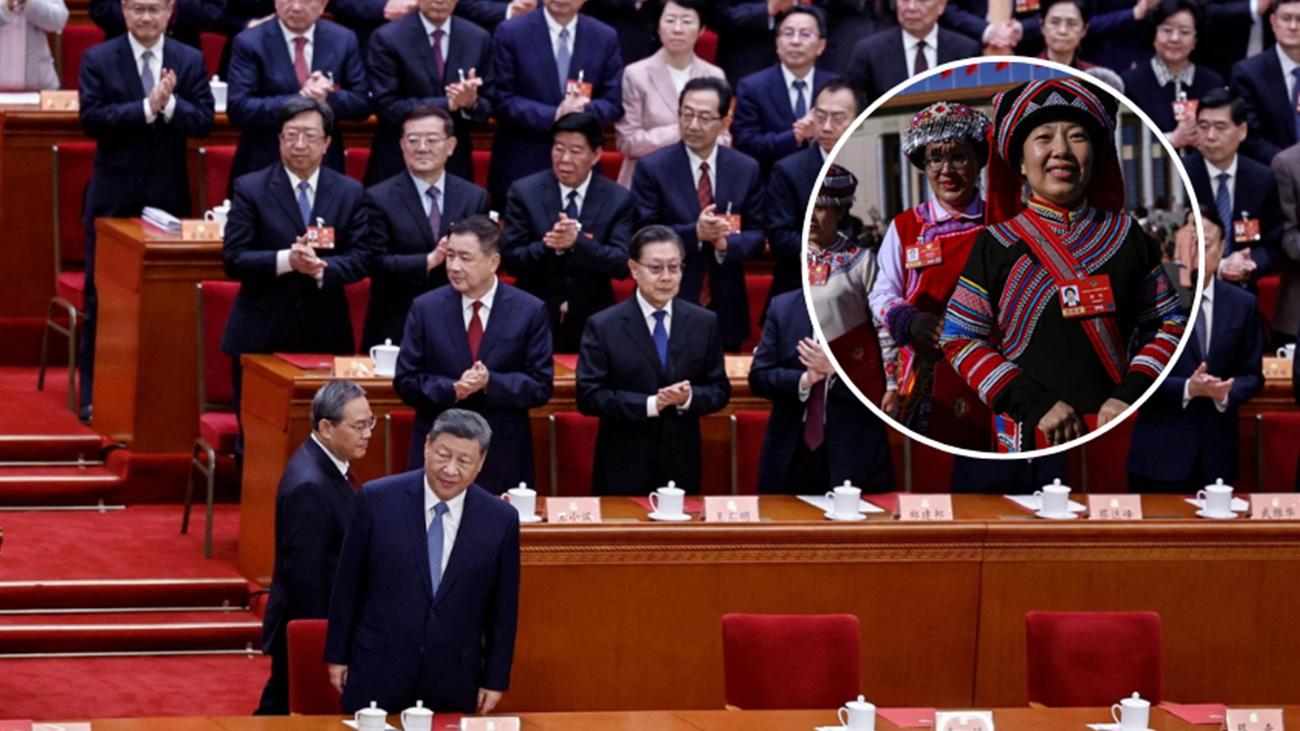
China has approved a new law aimed at strengthening what officials describe as a “shared national identity” among the country’s 55 recognized ethnic minority groups. The move has drawn attention from critics who fear it may weaken the cultural identity of non-Han communities.
The legislation, titled “Promoting Ethnic Unity and Progress,” was passed during the closing session of the annual National People’s Congress meeting. Lawmakers approved the measure with 2,756 votes in favor, while three voted against and three abstained. According to state media, the law will come into effect on July 1.
Also Read: China announces US$200,000 aid package for Iran
China officially recognizes 56 ethnic groups. The Han Chinese form the majority, making up more than 91% of the country’s population of about 1.4 billion people. Ethnic minorities such as Tibetans, Mongols, Hui, Manchus, and Uyghurs mainly live in regions that cover nearly half of China’s land area, many of which are rich in natural resources.
According to the new law, Mandarin will become the main language used in schools, government offices, and official communication. The legislation states that in places where both Mandarin and minority languages are used, Mandarin must be given “prominence in placement, order, and similar respects.”
At the same time, the law says the state will respect and protect the learning and use of minority languages and writing systems. Authorities say the goal is to strengthen national unity while also protecting cultural traditions.
The legislation also promotes greater social integration among ethnic communities. It encourages interaction through education, housing, migration, culture, tourism, and economic development policies. Another provision seeks to prevent interference in marriage choices based on ethnicity, religion, or customs, which could encourage more marriages between different ethnic groups.
The draft also states that religious organizations and institutions must follow what it calls the “Sinicization of religion in China.” This policy aims to align religious practices more closely with Chinese culture and government regulations.
Also Read: World’s largest aircraft carrier deployed for Iran war catches fire: US Navy
Experts say the new law reflects China’s broader policy direction. Allen Carlson, an associate professor of government at Cornell University, said the measure suggests stronger efforts to integrate ethnic minorities into the national mainstream. According to him, the law signals that non-Han communities are expected to integrate more closely with the majority population and remain loyal to the central government.
However, China’s state media defended the legislation, saying it went through a detailed legislative process with consultations involving lawmakers and representatives from minority groups. An editorial in China Daily stated that the law protects cultural traditions and that claims suggesting minorities must choose between development and cultural preservation are misleading.


