

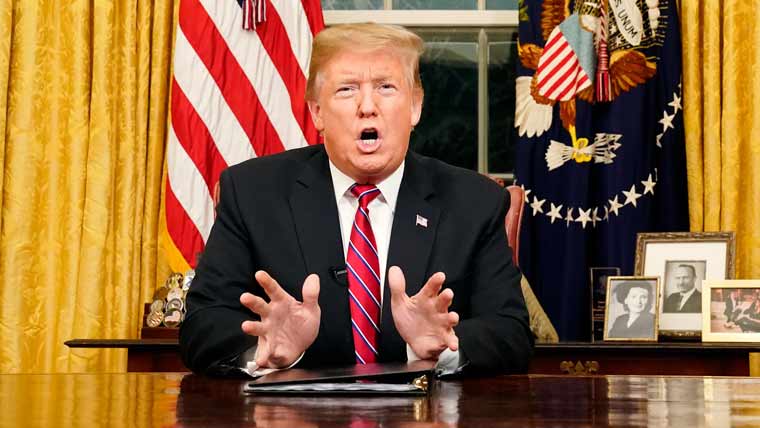
In a recent telephonic interview with US media, Trump said Europe should focus on the Russia-Ukraine conflict instead of Greenland, linking his strategic ambitions to the Nobel Peace Prize he was denied.
Trump sent a letter to Norwegian Prime Minister Jonas Gahr Støre, asserting that he no longer feels obliged to prioritize global peace after being overlooked for the Nobel Peace Prize, which he claims Norway controls. He warned that until the US gains control of Greenland, global security remains compromised. The Danish government and Greenland authorities rejected US pressure, intensifying diplomatic tensions.
According to reports, Trump announced potential tariffs on Denmark and eight European nations until Greenland comes under US jurisdiction. When asked about using military force to secure the island, he refused to comment, reiterating his stance on economic measures as leverage. The move has escalated fears of a transatlantic trade war and strained NATO unity, already under pressure from the Russia-Ukraine conflict.
Also Read: Trump threatens eight European nations with tariffs over Greenland
Experts warn that Trump’s statements could disrupt European industrial markets and revive investor fears of US-EU trade tensions that briefly eased mid-2025. The EU is reportedly preparing economic countermeasures, including possible tariffs on $93 billion in US goods starting February 6, 2026, or introducing the previously unused “Anti-Coercion Instrument” (ACI) to regulate investment and banking activities.
The controversy also touches on Trump’s long-standing campaign to position himself as a Nobel Peace Prize candidate, citing his role in preventing over eight wars. However, the 2025 Nobel Peace Prize was awarded to Venezuelan political leader Maria Machado, who recently offered her medal to Trump, though the Nobel Committee maintains that the prize cannot be transferred.
Trump’s claims, combined with Greenland’s refusal and EU economic countermeasures, have created a high-stakes geopolitical scenario affecting global security, trade, and transatlantic alliances. Analysts say the controversy could reshape NATO dynamics, test US-Europe relations, and influence global economic policies in the coming months.


