

US-Iran agree to 60-day roadmap toward final deal in Switzerland
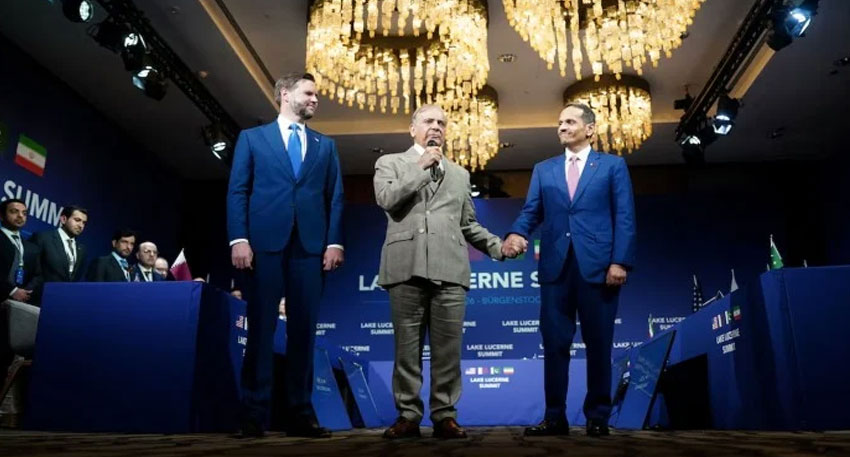
The talks, held under the framework of the Islamabad Memorandum of Understanding, brought together a US delegation led by Vice President JD Vance, along with Trump envoy Steve Witkoff and senior adviser Jared Kushner. Iran's delegation was led by Parliament Speaker Mohammad Bagher Ghalibaf and included Foreign Minister Abbas Araghchi, Central Bank Governor Abdul Naser Hemmati, Deputy Oil Minister Hamid Boord, and nuclear negotiator Ali Bagheri. Qatar and Pakistan co-mediated, with Pakistani Prime Minister Shehbaz Sharif and Qatari Prime Minister Sheikh Mohammed bin Abdulrahman Al Thani also in attendance, alongside Swiss Vice-President Ignazio Cassis as host and International Atomic Energy Agency chief Rafael Grossi.
The negotiations come amid a conflict that began on February 28 after US and Israeli strikes killed Iranian Supreme Leader Ali Khamenei, triggering a wider regional war that has drawn in Hezbollah in Lebanon and disrupted shipping through the Strait of Hormuz.
Negotiators agreed to establish a High-Level Committee to provide political oversight of the process. Chief negotiators from both sides will report to the committee while leading separate working groups on nuclear issues, sanctions, and monitoring and dispute resolution, according to a joint statement from the mediators. The committee's roadmap is intended to lay the groundwork for the immediate start of further technical talks toward a comprehensive deal within 60 days.
The parties also agreed to set up a direct communication line between Washington and Tehran to prevent incidents in the Strait of Hormuz and ensure safe passage for commercial vessels. A separate de-confliction cell, involving the US, Iran and the Lebanese government, and facilitated by Qatar and Pakistan was created to end the military hostilities in Lebanon. Araghchi, in a post on X, called the Lebanon mechanism "the first real test" of the agreement.
Araghchi said Tehran had also secured waivers for its oil and petrochemical exports, the lifting of a naval blockade on Iranian ports, the release of some frozen Iranian assets, and the launch of what he described as a "major reconstruction and development plan" for Iran. He did not provide further details on the assets or the reconstruction plan. Iran's semi-official news agency separately reported that Iran and Qatar signed a memorandum on implementing the release of Tehran's frozen funds.
The talks unfolded against a tense backdrop. Iran had again restricted traffic through the Strait of Hormuz in the days before the summit, and President Trump warned the US would resume strikes on Iran if it moved to close the waterway. Vance had expressed optimism about the negotiations despite the friction, saying Sunday that progress was being made on ending the Lebanon hostilities. "These things are always a little bit messy," he said.
Technical-level talks are set to continue at Bürgenstock through the rest of the week as both sides work to translate the roadmap into a comprehensive and lasting agreement.


