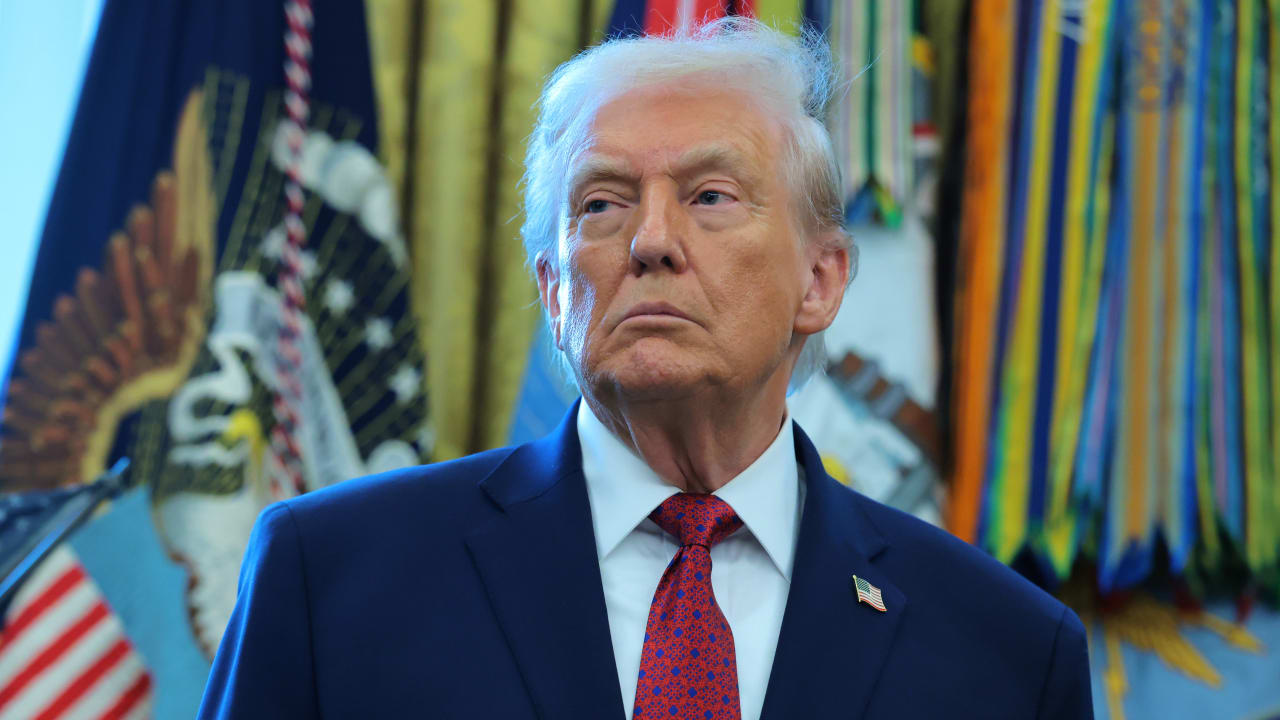
Greenland’s long-standing ties with Denmark and its strategic Arctic position have drawn fresh attention after former US President Donald Trump reiterated interest in acquiring Greenland for national security reasons, questioning Denmark’s legal claim over the island.
Trump’s remarks have revived debate over Greenland’s colonial past, its current self-rule framework, and the expanding US military presence in the Arctic, an area increasingly shaped by global power competition.
How Greenland Became Part of Denmark
Greenland was first inhabited by Inuit peoples around 2,500 BC. Viking settlers led by Erik the Red arrived around 985 AD, but disappeared by the 15th century as Inuit culture became dominant.
Denmark formally colonised Greenland in 1721, beginning with missionary Hans Egede’s arrival. The colonial legacy remains sensitive, with Egede’s statue in Nuuk viewed by many as a symbol of lost indigenous traditions.
In 1916, the United States formally recognised Danish sovereignty over Greenland as part of a treaty involving the sale of the Danish West Indies, now the US Virgin Islands.
Also Read: Trump warns of US attack if more protesters killed in Iran
Greenland’s Political Status Today
Greenland became a formal Danish territory in 1953 under Denmark’s constitution, without a public vote. Since 2009, Greenland has held the right to pursue independence through a referendum and parliamentary approval.
While Greenland exercises broad autonomy, foreign policy and defence remain under Danish control, unless jointly agreed otherwise. The island has a population of just 57,000 people, spread across 17 towns with no interconnecting roads.
Strained Denmark–Greenland Relations
Relations have been strained by revelations of historical abuses. In the mid-20th century, Inuit communities were forcibly relocated, undermining indigenous culture and language.
Denmark apologised in 2022 for sending Greenlandic children to Denmark in the 1950s, and again in 2025 for a decades-long birth control campaign involving thousands of women without consent.
A 2025 documentary also alleged Denmark profited from Greenland’s cryolite mining industry for over a century without benefiting local communities.
Greenland and the European Union
Greenland joined the European Community in 1973 through Denmark but withdrew in 1985 after gaining home rule. It now holds Overseas Country and Territory status, maintaining special trade and fisheries arrangements with the EU.
Also Read: Trump threatens Mexico, Colombia and Cuba after Venezuela operation
US Military Presence in Greenland
The United States has maintained a permanent military presence at Pituffik Air Base since 1951. The agreement allows Washington to build and operate bases with notification to Danish and Greenlandic authorities.
Denmark has historically supported the US presence, citing its own limited defence capabilities and NATO security commitments.
Why Trump Wants Greenland
Trump has described Greenland as vital to US national security, noting that the shortest route between Europe and North America runs through the island.
Greenland plays a critical role in US missile early-warning systems and sits at a strategic crossroads amid rising Arctic militarisation by NATO, Russia, and China. The island also contains rare minerals, oil, and gas reserves, though development remains limited.
What Greenlanders Want
Polls show most Greenlanders support independence in principle, but many remain cautious due to economic dependence on Denmark.
Fishing accounts for over 90% of exports, while Danish subsidies fund nearly half of Greenland’s public budget. Some analysts suggest future independence could involve a Compact of Free Association with the United States, similar to Pacific island nations.
Official Response from Denmark and Greenland
Denmark’s Prime Minister Mette Frederiksen previously dismissed Trump’s proposal as “absurd.” In December 2025, Frederiksen and Greenland’s Prime Minister Jens-Frederik Nielsen reaffirmed that Greenland cannot be annexed and remains non-negotiable.