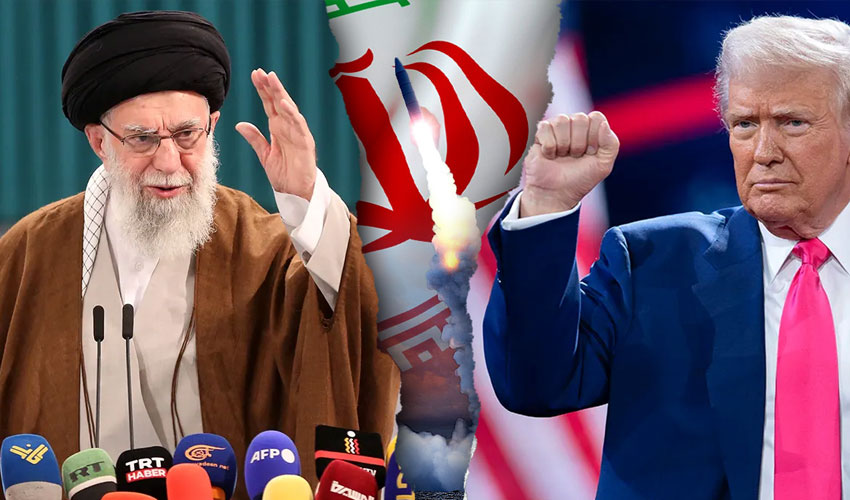
US President Donald Trump is considering targeted military strikes on Iran aimed at encouraging anti-government protests following a deadly nationwide crackdown, according to sources familiar with the discussions. Analysts caution that any such action could sharply escalate tensions across the Middle East.
Advisers are reportedly weighing precision strikes on Iranian leaders and security forces to bolster public confidence among protesters after weeks of unrest. Sources told Reuters the strategy is designed to weaken state authority and catalyze demonstrations after violence that left thousands dead.
Officials are also discussing broader military options, including attacks on Iran’s ballistic missile infrastructure or nuclear enrichment facilities, to achieve a longer-term strategic effect. No final decision has been made, and deliberations remain fluid.
Also Read: Trump warns Iran as US Naval fleet expands in Middle East
Expanded US Military Presence
Washington’s operational options widened this week with the arrival of a US aircraft carrier and supporting warships in the region. Trump warned Tehran that any future US action would exceed the scale of last June’s strikes on three nuclear sites, describing the naval deployment as an “armada” moving toward Iran.
Iran Prepares for Response, Keeps Diplomacy Open
Iran is preparing for the possibility of confrontation while signaling openness to diplomacy. A senior Iranian official said Tehran is ready for talks based on mutual respect but would defend itself “like never before” if attacked.
Iran maintains its nuclear program is civilian, a claim disputed by Western governments. Iran’s mission to the UN warned of unprecedented retaliation if conflict is imposed.
Doubts Over Regime-Change Outcomes
Israeli officials and US intelligence assessments question whether airstrikes alone could trigger regime change. A senior official involved in US–Israel coordination said removing Supreme Leader Ali Khamenei would not automatically collapse the system, as leadership could be rapidly replaced. Intelligence assessments reportedly note that despite protests and economic strain, the Iranian state remains firmly in control.
Also Read: Any US strike will mean full scale war: Iran
Khamenei’s Continued Influence
At 86, Supreme Leader Ali Khamenei has reduced public appearances and delegated daily administration to allies within the Islamic Revolutionary Guard Corps (IRGC), including senior adviser Ali Larijani. Nevertheless, Khamenei retains ultimate authority over war decisions, nuclear policy, and succession.
Human Toll and Regional Concerns
Human rights group HRANA estimates 5,937 deaths during the unrest, including 214 security personnel, while Iranian officials cite 3,117 fatalities.
Gulf allies fear US strikes could prompt Iranian missile or drone retaliation, potentially via Tehran-aligned groups in Yemen. Saudi Arabia, Qatar, Oman, and Egypt have reportedly urged Washington to refrain from action and stressed their airspace and territory cannot be used.
Arab officials warned bluntly: “The United States may pull the trigger, but it will not live with the consequences. We will.”