

Pakistan urges diplomacy after UNSC Iran sanctions vote
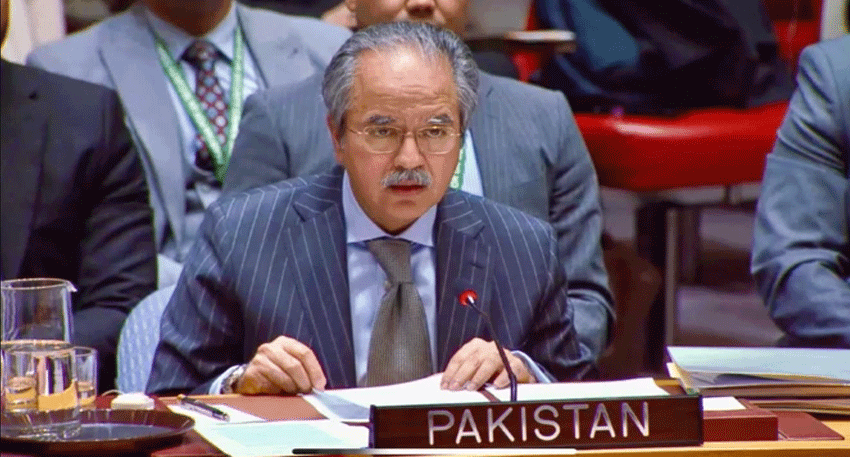
The vote concerned a US-sponsored resolution seeking to extend the mandate of a panel of experts that assists the council’s Iran sanctions committee.
Russia and China vetoed the proposal, while 11 council members voted in favour. Pakistan and Somalia abstained from the vote.
The decision has renewed differences among major powers over how the international community should deal with Iran’s nuclear programme and sanctions.
Pakistan remains concerned that the consideration of Iran nuclear issue, including by the Security Council, has become further complicated over a period of time. We have clearly come a long way from the spirit of cooperation and peaceful settlement of disputes that characterized the adoption of resolution 2231 more than a decade ago. We reiterate our position that the Iran nuclear issue should be addressed through peaceful means and in accordance with the rights, obligations and responsibilities of the parties concerned. Explanation of Vote by Ambassador Asim Iftikhar Ahmad, Permanent Representative of Pakistan to the UN, on the Security Council Vote on the Draft Resolution Concerning Panel of Experts of the 1737 Committee on Iran Please listen to the full statement below
— Permanent Mission of Pakistan to the UN (@PakistanUN_NY) September 17, 2026
Russia and China oppose sanctions monitoring extension
The panel of experts was established to monitor alleged violations of international sanctions against Iran and report its findings to the 15-member Security Council.
However, the council has reportedly been without an active panel for the past year because members could not agree on new appointments. Such appointments require consensus among council members.
Russia and China have argued that UN sanctions against Iran were removed under the 2015 nuclear agreement, formally known as the Joint Comprehensive Plan of Action (JCPOA).
The United States withdrew from the agreement in 2018 during Donald Trump’s first term. France, Britain and Germany later accused Iran of violating its nuclear commitments, leading to the reimposition of UN sanctions.
Iran has denied seeking nuclear weapons and maintains that its nuclear programme is intended for peaceful purposes.
Pakistan calls for diplomacy and dialogue
Addressing the UNSC session, Pakistan’s permanent representative, Ambassador Asim Iftikhar Ahmad, said the Iran nuclear issue had become increasingly complicated.
“We have clearly come a long way from the spirit of cooperation and peaceful settlement of disputes that characterised the adoption of resolution 2231 more than a decade ago,” he said.
Ahmad pointed to continuing regional tensions, hostilities and strikes on nuclear facilities as factors that have made diplomatic efforts more difficult.
He said Pakistan continues to believe that diplomacy and dialogue should guide efforts to resolve outstanding issues related to Iran’s nuclear programme.
“Pakistan has consistently advocated the primacy of diplomatic engagement and the imperative of avoiding confrontation and conflict,” the ambassador said.
He also stressed that the issue should be addressed peacefully while respecting the rights and responsibilities of all parties.
Also Read:Altaf Hussain’s London home attacked by masked men
Islamabad supports IAEA’s technical role
Pakistan’s representative also highlighted the role of the International Atomic Energy Agency (IAEA), which is responsible for monitoring nuclear safeguards and verifying compliance with relevant agreements.
“We also lend our support to the critical role of the International Atomic Energy Agency (IAEA) as the technical body entrusted with implementing the respective safeguards agreement. The IAEA should ensure this important work as per its mandate, independently and without political interference,” Ahmad said.
The statement reflects Pakistan’s position that technical assessments of Iran’s nuclear activities should remain separate from political disputes among major powers.
The IAEA’s work includes monitoring nuclear activities under safeguards agreements and providing technical information to the international community.
Pakistan urges parties to resume negotiations
Ahmad said Pakistan would continue efforts to promote peace and stability in the region through diplomatic engagement.
He referred to the Islamabad Memorandum of Understanding (MoU) as a foundation for further efforts to resolve differences.
“We call on all parties to implement the commitments agreed in the Islamabad MoU, return to the negotiating table and allow diplomacy to deliver for the sake of regional and international peace and security,” he added.
The appeal comes amid wider tensions involving Iran, the United States, Israel and European countries over nuclear activities, sanctions and regional security.
During the UNSC meeting, Russia and China also criticised what they described as the politicisation of the council’s approach to Iran.
Russian UN Ambassador Vassily Nebenzia urged Western countries to avoid actions that could further complicate the crisis in the Persian Gulf.
“The only way to resolve disagreements and to alleviate concerns ... pertaining to the Iranian nuclear program is through political and diplomatic efforts,” he said.


