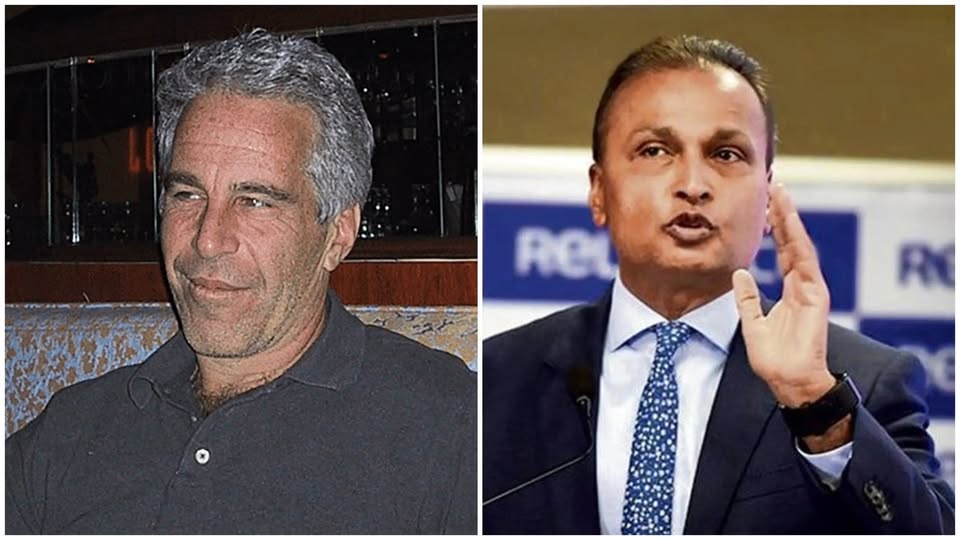
A detailed report by The New York Times has revealed that Jeffrey Epstein presented himself as a key insider within the administration of Donald Trump while engaging with Indian businessman Anil Ambani, offering political guidance and access to influential figures.
Epstein Claimed White House Access
According to the report, based on a review of hundreds of private messages, Epstein positioned himself as a power broker capable of providing “inside” information on US foreign policy and decision-making during the early years of the Trump administration.
Ambani, one of India’s leading industrialists, sought Epstein’s guidance in understanding how India could align with US national security strategy. In one exchange, Ambani requested assistance in dealing with the White House on issues related to defence cooperation and bilateral relations.
Epstein reportedly responded by promising access to insider-level insights, reinforcing his image as a well-connected intermediary.
Insights Into US Policy and Appointments
The The New York Times report further suggests that Epstein shared advance information on key US appointments and foreign policy decisions. He indicated that David Petraeus was unlikely to be appointed US ambassador to India—an assessment that later proved accurate when Kenneth I. Juster was selected.
Similarly, Epstein predicted that John Bolton would replace H. R. McMaster as national security adviser—another forecast that materialized months later.
These exchanges highlight Epstein’s ability to project influence, though it remains unclear whether his information came from direct sources or strategic speculation.
Also Read: New Epstein files mention Trump as abuse claims spark fresh debate
Offers of Political Introductions
The report also states that Epstein offered to connect Ambani with prominent figures close to Trump, including Stephen K. Bannon and Thomas J. Barrack Jr.. In return, Ambani presented himself as a conduit to the government of Narendra Modi.
Broader Global and Strategic Context
According to The New York Times, the conversations also touched on global geopolitics, including US efforts to isolate Iran and encourage closer ties with Israel. Epstein reportedly advised that India’s increased defence cooperation with Israel could improve its standing with Washington.
Financial Troubles and Continued Contact
The communications continued into 2019, when Ambani faced financial challenges and sought advice on raising funds. Epstein offered guidance but emphasized that he was acting as a friend and not for financial gain.
The report notes no clear evidence of formal payments for advisory services, although interactions between the two remained frequent until shortly before Epstein’s arrest in July 2019 on charges related to sex trafficking.
Questions Over Influence and Credibility
The The New York Times report underscores Epstein’s extensive network and his ability to present himself as a global intermediary operating in elite political and financial circles. However, it also raises questions about the extent of his actual influence versus perceived access.
Indian authorities have dismissed the communications as unreliable, describing them as speculative commentary by a convicted individual.