

Alan Greenspan, legendary Federal Reserve Chairman, dies at 100
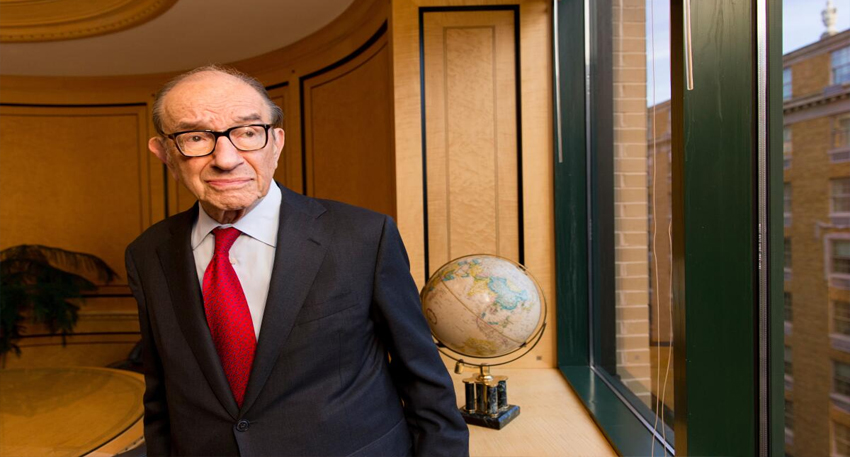
Alan Greenspan, the former Federal Reserve chairman whose words could move global markets with a single phrase, died Monday at his home from complications of Parkinson's disease, his wife announced.
Greenspan served five terms as Fed chairman under four presidents, starting with Ronald Reagan, who nominated him in 1987, and his term under George W. Bush expired in 2006. His eighteen-and-a-half year tenure is the second-longest as head of the nation's central bank
Born in 1926 in New York, Greenspan grew up during the Great Depression before going on to become, by some measures, the most closely watched economic figure in the United States outside the presidency.
A 1996 comment about "irrational exuberance" in the markets initially rattled investors, even though the dot-com bubble he was warning about didn't actually burst until 2001.
Also Read: Passport fee payment to be fully digitised from July 1
Through the 1990s, his influence was so pronounced that ordinary Americans hung on the Fed chairman's every word during a period when financial news seemed to be playing everywhere, from offices to barbershops.
His distinctive, deliberately vague style of public remarks even earned its own nickname among economists and journalists: "Fedspeak."
He would ultimately be remembered both as a celebrated architect of monetary policy and as a regulator who, by his own delayed admission, didn't always get it right.
The Federal Reserve, in a statement following his death, said he brought rigorous analytical discipline to monetary policymaking and helped build the credibility that remains one of the central bank's most important assets
Greenspan's death leaves behind a legacy shaped equally by the prolonged booms he helped foster and the historic crash that followed not long after he left office.