

Sudan gold mine collapse kills at least 60, many still missing
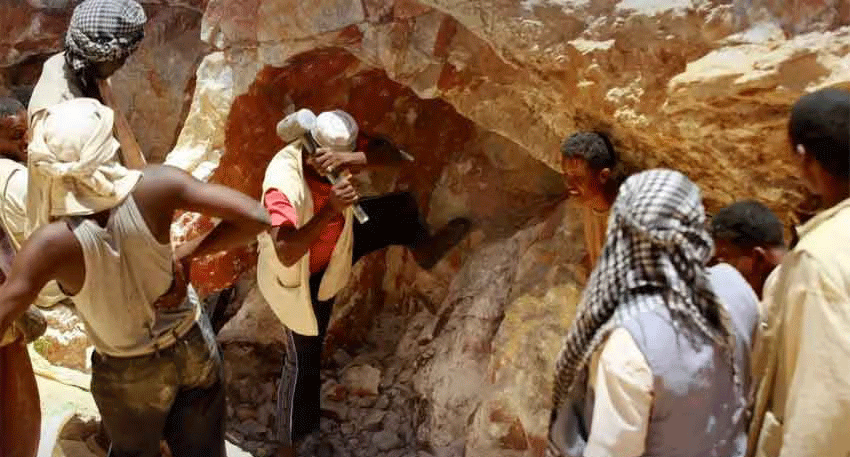
At least 60 people have died after a gold mine collapsed in southern Sudan, while rescuers continue searching for miners who may still be buried under the rubble.
The collapse occurred at the Al-Zaraa gold mine in West Kordofan, an area where many young Sudanese work in unregulated mining sites to earn a living.
Two survivors described the rescue effort as difficult, saying miners had been working through the night with basic tools to recover bodies and search for possible survivors.
The disaster highlights the dangers faced by Sudan’s small-scale miners, many of whom work in unstable shafts without proper safety equipment or professional supervision.
Mine shafts collapse during overnight work
According to survivors, the mine’s shafts began collapsing on Tuesday while dozens of small-scale miners were underground.
By the following morning, around 60 bodies had reportedly been recovered. However, the exact number of people still missing remained unclear.
Khair al-Sayyed Jabara, one of the survivors, said miners had spent the night trying to clear the collapsed area.
“We don't know how many more are still inside,” he said.
“Everyone's working very hard to retrieve the bodies or any survivors, but it's difficult. We need heavy machinery to clear the rock and soil.”
Another miner, Al-Amin Suleiman, said the shafts at Al-Zaraa were built close to one another. He explained that the collapse of one shaft could affect nearby sections of the mine.
“This is what happened here. So far, 60 bodies have been pulled out, but there are people still trapped underground since yesterday. I don't think they are alive,” Suleiman said.
His account underlined the serious challenges facing rescue teams, who have been relying on basic equipment rather than specialised machinery.
Unregulated mining puts workers at risk
Gold mining is a major source of income in Sudan, particularly as the country continues to suffer from the effects of war and economic disruption.
Since fighting began in April 2023 between the Sudanese army and the paramilitary Rapid Support Forces, many people have lost jobs and turned to informal mining to support themselves and their families.
Al-Zaraa is among the unregulated mining sites where workers operate in dangerous conditions. Many miners use their hands and simple tools to extract gold from the ground, often for limited daily earnings.
Most of Sudan’s gold is produced through artisanal and small-scale mining. This includes work in old mine shafts, unofficial mining zones and areas that lack proper safety controls.
Workers also face exposure to hazardous chemicals used during gold processing. These include cyanide and mercury, which can cause serious health and environmental problems when handled without adequate protection.
The European Union announced restrictions in July on the sale, transfer and export of mercury and cyanide to Sudan. The measures were aimed at limiting their use in the country’s exploitative gold trade.
Also Read:Australia tightens student visas, restricts partners and children
War increases dependence on gold mining
Sudan’s gold industry has become even more important during the war, as millions of people face unemployment, hunger and displacement.
Before the conflict pushed nearly 20 million Sudanese into severe hunger, artisanal mining already provided work for more than two million people, according to industry figures.
For many workers, gold mining is one of the few available ways to earn money. However, the lack of regulation leaves them exposed to unsafe working conditions and serious health risks.
Sudan is one of Africa’s leading gold producers. The country reported production of 70 tonnes last year, described as a five-year high.
Despite this production, officials say much of Sudan’s gold is smuggled across its borders. Some of the gold reportedly passes through Chad, South Sudan and Egypt before reaching the United Arab Emirates.
The gold trade has also attracted international scrutiny because of its alleged role in financing the conflict.
International sanctions target gold networks
In July, the European Union and the United Kingdom announced sanctions targeting parts of Sudan’s gold trade.
The British government said its measures focused on “illicit gold and finance networks” operating through Dubai and Hong Kong. It alleged that these networks were helping fund “weapons procurement, military operations and the activities of armed groups” involved in the war.
The United Nations has repeatedly warned that both sides of the conflict benefit from control over Sudan’s natural resources.
The organisation has described the country’s resource-driven “war economy” as a factor helping sustain the fighting.
The latest mine collapse therefore carries significance beyond the immediate loss of life. It shows how ordinary workers continue to face danger while depending on an industry that remains closely linked to Sudan’s wider economic and security crisis.


