

UEFA World Cup boycott grows over FIFA investor plan
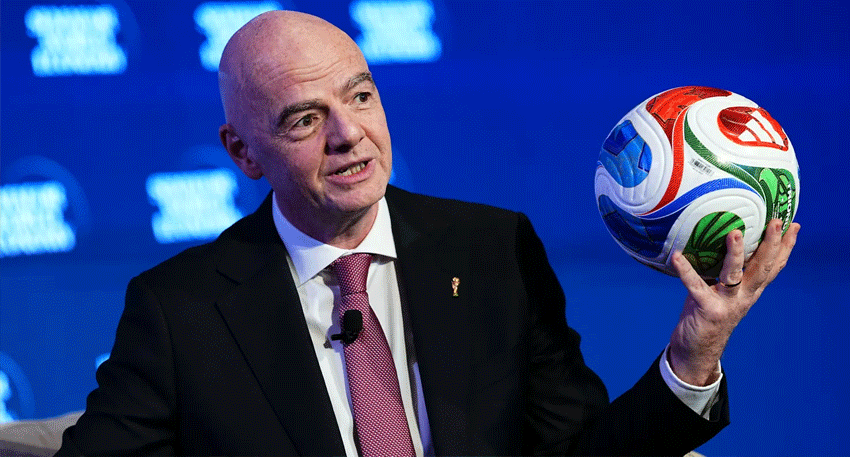
UEFA member associations have unanimously backed a possible boycott of the World Cup and other FIFA competitions.
The decision came after FIFA announced plans to create a new company that would manage its biggest tournaments.
European football authorities strongly objected to the proposal, particularly the plan to allow outside investors to own part of the new subsidiary.
UEFA said its national teams would not participate in FIFA competitions while the proposal remains active.
The European governing body said the boycott position would change only if FIFA completely abandons the plan and provides binding guarantees against future private ownership.
The dispute could create one of the biggest confrontations between FIFA and European football in recent years.
Why UEFA is opposing FIFA’s plan
FIFA announced plans to establish a subsidiary valued at around $20 billion to operate the World Cup and other major competitions.
Under the proposal, external investors could acquire stakes of up to 20% in the new company.
FIFA believes the structure could create new financial opportunities around its global tournaments.
However, UEFA and its member associations have raised serious concerns about bringing private investors into the ownership structure.
UEFA said football’s biggest tournament should not be treated like an ordinary commercial investment.
“The World Cup cannot be treated as an investment product. It is one of football’s greatest sporting legacies,” UEFA said.
The organisation argued that the tournament belongs to the wider football community because generations of players, national teams and supporters have helped build its importance.
UEFA made its position particularly clear by adding, “The World Cup is not for sale.”
The statement shows that the dispute is not simply about money.
It also involves questions about who should control football’s most valuable international competitions.
European teams could refuse FIFA competitions
UEFA said no European national team would participate in a FIFA competition as long as the investment proposal remains active.
The organisation said FIFA must abandon the proposal completely before European teams reconsider their position.
UEFA also wants binding assurances that FIFA will not attempt to place its competitions or governance under private ownership again.
This position could have serious consequences because European national teams are among the biggest attractions in international football.
The European teams also include several of the sport’s most commercially valuable markets and some of its strongest national sides.
If the dispute continues, attention will turn to whether UEFA can maintain unity among its member associations.
For now, however, the associations have presented a united front against the proposed investment structure.
The English Football Association also supported the European position.
An FA spokesperson said the organisation “stands shoulder to shoulder with our European colleagues.”
That response indicates that opposition to FIFA’s proposal is not limited to UEFA’s central leadership.
Also Read: FIFA World Cup stake sale plan faces strong UEFA opposition
The dispute has also attracted criticism from outside Europe.
The Asian Football Confederation and CONCACAF have previously criticised FIFA over the proposal.
Both organisations said they were not properly consulted before the plan was announced.
Their concerns could increase pressure on FIFA to explain how the proposed subsidiary would operate.
The involvement of several continental football bodies also makes the dispute broader than a disagreement between FIFA and UEFA.
FIFA controls the global football structure, while continental confederations oversee competitions and football development across their respective regions.
Any major change involving FIFA’s tournaments could therefore affect multiple confederations and their member associations.
The lack of consultation has become another important issue alongside concerns over private ownership.
Major tournaments could be affected
The disagreement comes at a sensitive time for FIFA because several major international competitions are approaching.
The Women’s World Cup is scheduled to take place in Brazil next year.
FIFA is also preparing for its first Under-15 World Cup, which is scheduled to take place in Azerbaijan in October.
The UEFA position refers to FIFA competitions generally, meaning the dispute could potentially affect more than the senior men’s World Cup.
However, the World Cup remains the most important issue because of its enormous global audience, commercial value and sporting significance.
Any decision by European teams to withdraw from FIFA competitions could therefore have a major effect on tournament planning.
It could also create uncertainty for broadcasters, sponsors, supporters and host countries.


