

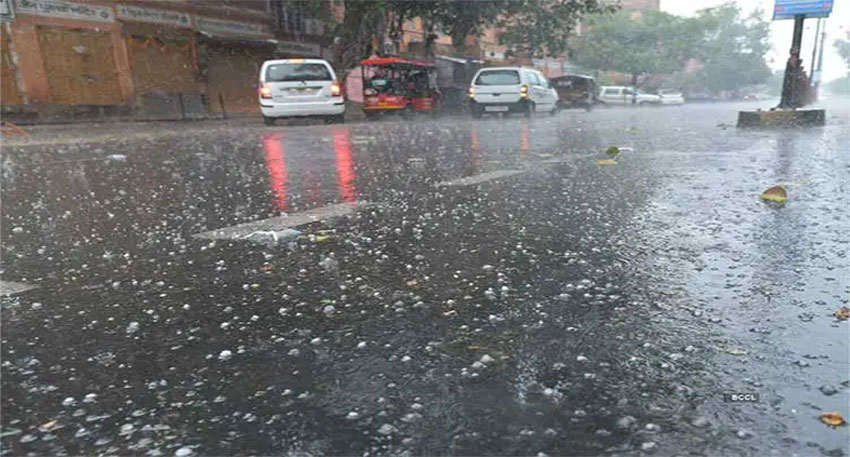
A powerful hailstorm struck Lahore on January 22, 2026, bringing heavy rain and unusually large hailstones that disrupted routine life and transformed several neighbourhoods into icy landscapes.
The hailstorm hit hardest near the Wagah Border, where Dial village in the Batapur area witnessed intense hail activity. Streets and open spaces were blanketed with thick layers of ice, creating snow-like scenes rarely seen in the provincial capital. Videos circulating on social media showed roads covered in hailstones, while children were seen playing outdoors as the storm briefly turned the area white.
Other parts of Lahore were also affected by the severe weather system. Johar Town, Gulshan-e-Ravi, and areas along Multan Road experienced rain mixed with hail, leading to slippery roads, traffic slowdowns, and reduced visibility during peak hours. Motorists reported difficult driving conditions as sudden downpours and falling hail caught many commuters off guard.
The Pakistan Meteorological Department said a strong westerly wave is currently influencing upper and central Punjab. According to the department, intermittent rain, cold winds, and further drops in temperature are expected in Lahore through January 23. Authorities warned residents to prepare for continued cold and unstable weather.
Also Read: 48 hour gas shutdown announced across Sindh
The National Disaster Management Authority advised citizens to remain cautious, especially while traveling, as wet and icy roads increase the risk of accidents. Residents were urged to follow official safety advisories and avoid unnecessary movement during severe weather spells.
Officials described the Lahore hailstorm as one of the most intense winter weather events of the season, highlighting the growing impact of unpredictable weather patterns across the region.


