

Lahore air pollution reaches hazardous level as AQI crosses 500 again
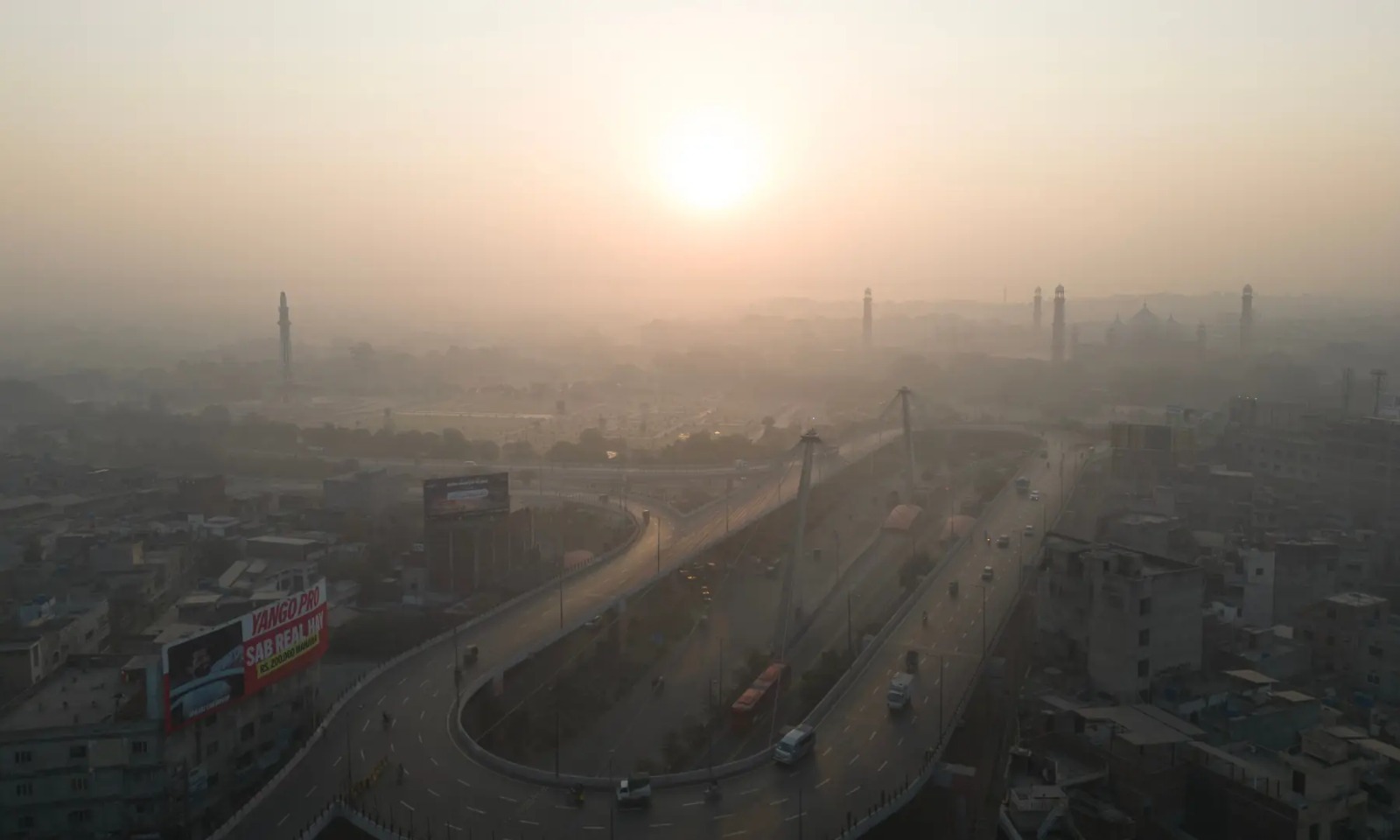
The Swiss air quality monitoring platform placed Lahore at the top of its global ranking and classified its air as ‘hazardous’. This level indicates extremely polluted conditions that can seriously affect people’s health.
Delhi ranked second with an AQI of 207, followed by Karachi at 180, Mumbai at 177 and Cairo at 162. Lahore’s pollution level was more than twice that of Delhi during the same period.
Punjab cities face severe air pollution
The pollution crisis was not limited to Lahore, as several other cities in Punjab also recorded very high AQI levels. IQAir’s ranking of Pakistani cities placed eight Punjab cities among the country’s 10 most polluted urban centres.
Kahna Nau, in Lahore district, recorded the highest AQI of 606, followed by Lahore at 538 and Bahawalpur at 536. Sargodha recorded 392, while Gujranwala stood at 347.
Multan, Dera Ghazi Khan, Skardu, Faisalabad and Peshawar were also included in the list of the country’s 10 most polluted cities. These readings show that poor air quality has become a serious problem across several parts of the country.
Lahore has remained among the world’s most polluted major cities in recent weeks. Its AQI was 266 on Saturday evening, while heavy smog pushed the reading to 465 on Friday morning.
Air pollution is also a major threat to public health around the world. Global health estimates suggest that indoor and outdoor air pollution together contribute to around 8.1 million deaths every year, while outdoor particulate matter alone accounts for 4.7 million deaths.
Punjab steps up crackdown against pollution
As air quality continues to worsen, the Punjab Environment Protection and Climate Change Department has increased its action against environmental violations. During the first 11 months of 2026, authorities imposed fines of Rs449.5 million, sealed 6,476 premises and carried out 1,808 demolitions.
According to the Environment Protection Agency (EPA) Punjab, enforcement teams conducted 187,588 inspections across the province between January 1 and November 21. The campaign targeted industrial pollution, brick kilns, illegal plastic businesses, commercial buildings and dust-producing activities.
The total fines increased by 60 per cent compared with the same period last year. Industrial units received the largest share of penalties, with fines reaching Rs231.6 million compared with Rs108.8 million in the corresponding period of 2025.
Brick kilns were fined Rs183.3 million, while penalties against plastic-related violations rose to Rs34.5 million. The amount collected from plastic-related violations was around 4.5 times higher than last year.
Brick kilns and commercial buildings face action
Brick kilns remained a major focus of the enforcement campaign, with 85,768 inspections carried out during the reporting period. Officials demolished 1,431 kilns or units and sealed another 1,018 premises.
Authorities also conducted 50,555 inspections of industrial units. These operations resulted in 1,525 premises being sealed and 377 demolitions.
The department increased checks on restaurants and commercial buildings that were operating without the required suction hoods. During 10,766 inspections, officials ensured the installation of 4,385 suction hoods and sealed 1,287 premises.
November alone saw the installation of 1,130 suction hoods as part of the campaign. Officials said the enforcement drive was continuing across the province.
On November 21, teams carried out 1,022 inspections and imposed fines of Rs1.87 million. They also sealed 20 premises, registered seven FIRs and demolished one brick kiln.
During the same operation, officials confiscated 390 kilogrammes of plastic bags and supervised the installation of 72 suction hoods. The figures show that authorities are continuing action against businesses and industries accused of violating environmental rules.
Lahore’s latest AQI reading shows how serious the smog problem has become, while other Punjab cities are also facing unhealthy air. The government’s fines, inspections and closures show stronger enforcement, but lasting improvement will depend on controlling pollution at its main sources.
Also read: UET Lahore offers 2026 multiple jobs, check eligibility and procedure


