

How to stay safe and healthy during extreme heatwave in Pakistan
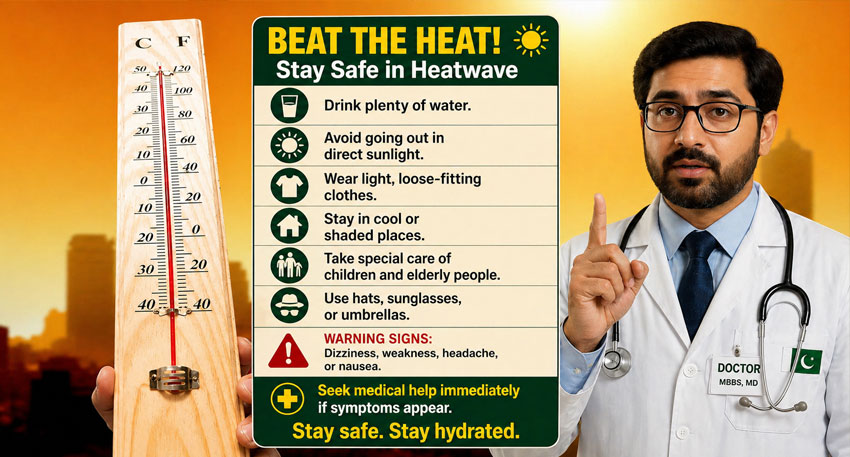
In many regions like Punjab, Sindh, and Balochistan, the temperature can reach dangerous levels, sometimes above 45°C. According to medical experts and weather authorities, such extreme heat can cause dehydration, heat exhaustion, and even life-threatening heatstroke if proper care is not taken.
Understanding the risk of heatwave in Pakistan
Heatwaves occur when the temperature stays much higher than average for several days. In Pakistan, dry weather, strong sunlight, and low rainfall make the heat more intense. Cities like Lahore, Multan, Jacobabad, and Sukkur often become the hottest areas.
Doctors warn that children, elderly people, outdoor workers, and pregnant women are at highest risk during extreme heat. Prolonged exposure to sunlight can quickly affect the body’s ability to control temperature.
Stay hydrated at all times
One of the most important steps during a heatwave is drinking enough water. Medical experts recommend drinking water regularly even if you are not thirsty.
Avoid sugary drinks, energy drinks, and too much caffeine because they can increase dehydration. Fresh water, lemon water, and ORS (oral rehydration solution) are better options to maintain body fluids.
Avoid direct sunlight during peak hours
Weather experts in Pakistan advise staying indoors between 11am and 4pm, as this is when the sun is at its strongest. If going outside is necessary, try to stay in shaded areas.
Wearing a light-colored, loose cotton cloth can help the body stay cool. Use a hat, cap, or umbrella to protect yourself from direct sun exposure.
Recognize early symptoms of heat illness
Doctors say it is important to recognize early signs of heat-related problems. These include dizziness, headache, excessive sweating, weakness, nausea, and rapid heartbeat.
If someone shows signs of heatstroke such as high body temperature, confusion, or fainting, immediate medical help should be sought. The person should be moved to a cool place and given water if conscious.
Keep your home cool and safe
During extreme heat, keeping your home cool is very important. Close curtains during the day to block sunlight and open windows at night for fresh air.
Use fans, air coolers, or AC if available. You can also place a wet cloth near windows or use water spray to reduce indoor temperature.
Special care for children and elderly
Health experts strongly advise extra care for children and elderly people. They should not be left alone in hot rooms or vehicles, even for a short time.
They should be given water frequently and kept in the coolest part of the house. Light food like fruits, yogurt, and vegetables is better during hot weather.
Food and diet precautions
During heatwaves, heavy and oily foods should be avoided. They increase body temperature and make digestion slower.
Fresh fruits like watermelon, melon, and oranges are helpful because they contain high water content. Light meals help the body stay active and hydrated.
Farmers and outdoor workers safety
In rural areas of Pakistan, farmers and laborers are highly exposed to direct sunlight. Experts recommend taking frequent breaks in shade and drinking water regularly.
Work should be planned for early morning or late evening when temperatures are lower. Proper head protection is also very important.
Government and emergency preparedness
Authorities like PDMA and Rescue 1122 remain on alert during heatwaves. Emergency services are instructed to respond quickly to heat-related cases.
Weather updates should be followed regularly through official sources to stay informed about changing conditions.
Final advice
Extreme heatwaves in Pakistan are becoming more frequent and intense due to climate changes. Simple precautions can save lives and prevent serious health problems.
Read more: Heatwave alert as Met Office warns of extreme hot weather in Pakistan
Staying hydrated, avoiding sun exposure, and taking care of vulnerable people are the most effective ways to stay safe during hot weather.
Read more: Experts share key tips to beat the heat as temperatures rise