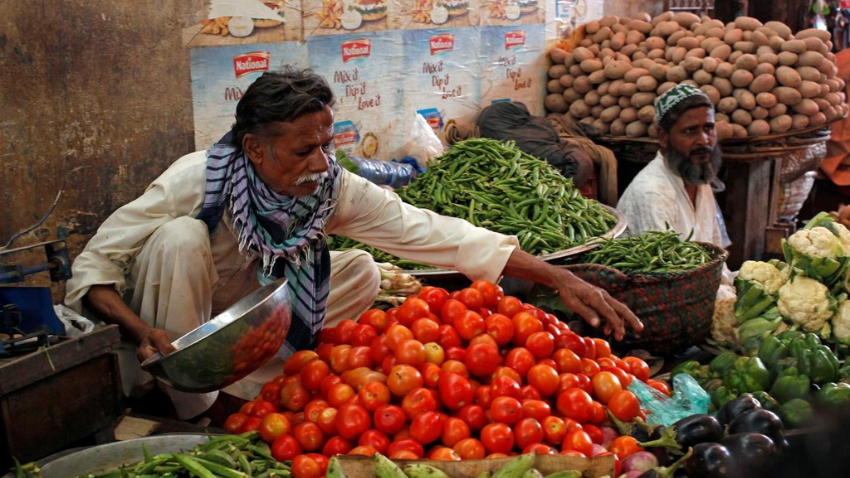
Despite repeated claims by authorities, the government’s price control system has failed to provide relief to citizens. In major markets, essential food items continue to be sold at rates much higher than those officially fixed.
The situation has become more noticeable during Eid holidays, when demand increases sharply. The gap between official and retail prices has widened, exposing weaknesses in monitoring and enforcement across local markets.
Market surveys show that most items, including poultry, vegetables, and fruits, are either unavailable at official rates or are being sold at significantly higher prices. This has reduced the effectiveness of weekly price lists issued by authorities.
For example, live chicken was officially fixed at Rs394–Rs408 per kg, but it was mostly unavailable at those rates. Chicken meat, fixed at Rs591 per kg, was sold between Rs660 and Rs700, while boneless chicken crossed Rs1,000 per kg in many areas.
Vegetable prices also showed major differences. Potatoes, fixed at Rs18–Rs20 per kg, were sold at Rs30–Rs40, while tomatoes, officially priced at Rs70–Rs75, were available between Rs120 and Rs160 per kg. Onion prices remained between Rs100 and Rs130 per kg despite a lower official rate of Rs70–Rs75.
Essential kitchen items were no different. Garlic, ginger, and other daily-use goods were sold well above fixed prices. In some cases, imported garlic reached as high as Rs600 per kg, far above official limits.
Must Read: Gas shortage alert as supply drops in Sui Southern network
Other vegetables such as brinjal, bitter gourd, spinach, zucchini, cucumbers, lemons, and capsicum also showed similar gaps. Some items listed in official notifications were not even available in the markets.
Fruit markets also reflected price differences. Apples, bananas, dates, kinnow, and pomegranates were all sold above official rates, with some items nearly doubling in price depending on quality and demand. Citizens and observers believe weak enforcement is the main reason behind this situation. Most consumers shop in neighborhood markets where monitoring is limited, allowing vendors to ignore official pricing.
Although authorities carry out inspections and impose fines, shopkeepers often resume overcharging once officials leave. Many traders treat penalties as a routine business expense, which ultimately affects consumers.
Shoppers say there is little real control in the markets. They complain that official rate lists exist only on paper, while actual prices remain high and inconsistent with those lists. For many families, especially low- and middle-income households, rising prices are creating financial pressure. People say their expenses keep increasing, while incomes remain the same.
Some consumers are now buying fewer vegetables and fruits due to affordability issues. Even basic food items are becoming difficult to purchase for daily needs. Experts suggest that without stronger monitoring, stricter penalties for repeat violations, and better supply chain management, the price control system will continue to struggle.