

Pakistan declares population growth a national emergency as rate reaches 2.55%
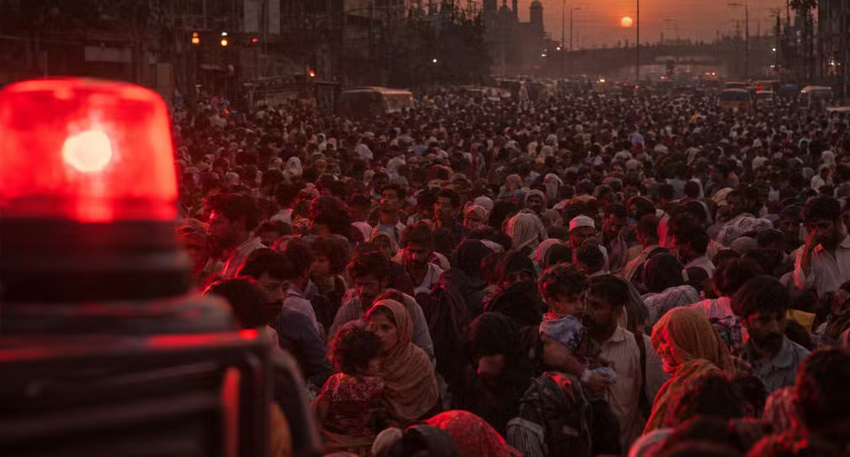
The announcement highlights growing concerns about the country's ability to provide enough jobs, healthcare, education and other basic facilities.
The Population Emergency Pakistan declaration follows discussions about the increasing pressure on public resources.
The issue was discussed during a coalition meeting focused on the media's role in creating awareness about population stabilisation and family planning.
Pakistan Now Has 241.5 Million People
According to the latest figures shared at the meeting, Pakistan has become the world's fifth most populous country, with an estimated population of 241.5 million.
Pakistan Population 2026 figures show that the annual growth rate has continued to increase instead of declining.
The country's fertility rate stands at 3.6 children per woman, significantly higher than the Council of Common Interests (CCI) target of 2.1 children per woman.
Another major concern is the lack of access to family planning services. Around 17.3% of married couples still cannot access the family planning services they need.
Balochistan Records the Highest Fertility Rate
Population growth is not the same across all provinces.
Balochistan has the highest fertility rate, with an average of five children per woman. Around 32% of the population in the province also has an unmet need for family planning services.
Another important factor is Pakistan's young population. Around 67% of the country's people are under the age of 30.
While this creates opportunities for economic growth, it also increases pressure on the government to provide employment, education and healthcare facilities.
Read Also:Pakistan tightens rules for camera-enabled smart glasses
11,000 Mothers Die During Pregnancy and Childbirth Every Year
Rapid Pakistan Population Growth is also creating serious challenges for maternal healthcare.
Around 11,000 mothers die every year during pregnancy or childbirth, highlighting the need for improved healthcare services.
The employment situation is another major concern. Pakistan needs to create approximately 2.6 million new jobs every year to provide employment opportunities for its growing workforce.
Meanwhile, student enrolment is expected to reach 60 million by 2050, increasing the demand for schools, teachers and educational facilities.
Population projections also indicate that Punjab's population could reach 253 million, while Sindh's population may increase to 111.5 million by 2050.
What Steps Is the Government Taking?
To address the Population Emergency Pakistan situation, the government has introduced several measures.
A National Population Council has been established under the chairmanship of the prime minister to oversee population-related policies and programmes.
The federal government has also removed taxes on contraceptives in the 2026-27 budget to make family planning products more accessible.
Meanwhile, the Council of Islamic Ideology has recognised the importance of birth spacing for protecting maternal and child health.
However, the national action plan still faces a 39% funding gap, creating difficulties in implementing planned measures.
Media Asked to Play a Bigger Role
During the meeting, participants stressed that media organisations should take an active role in educating people about family planning, maternal healthcare and population management.
They also highlighted the need to hold government institutions accountable for delivering healthcare services and implementing population policies.


