

Nestlé Pakistan, UAF join hands to advance regenerative agriculture and sustainable food systems
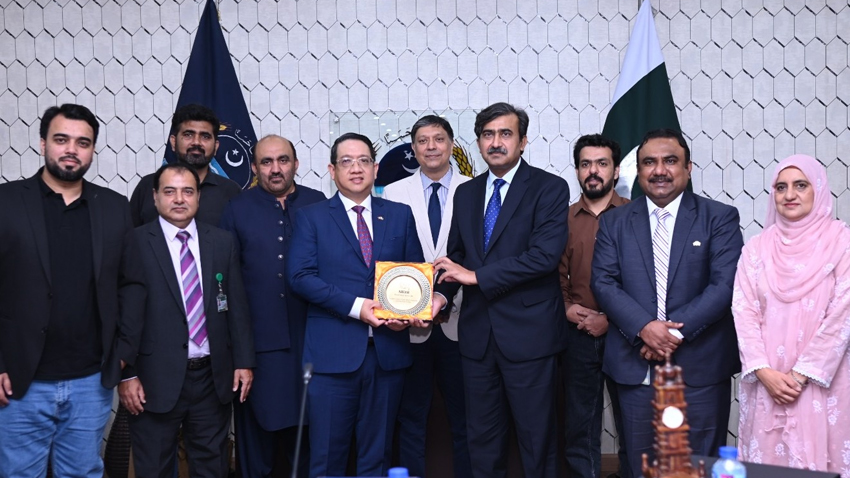
The two organizations have signed a Memorandum of Understanding (MoU) covering sustainable agriculture, food science, nutrition, applied research and workforce development. The collaboration supports Nestlé’s efforts to advance regenerative agriculture across its value chain as part of its global ambition to achieve net-zero greenhouse gas emissions by 2050.
The partnership also formalized the establishment of the Nestlé Learning Resource Center (NLRC) at UAF’s National Institute of Food Science and Technology (NIFSAT), providing a platform for knowledge sharing, research collaboration and capacity building.
Speaking on the occasion, Jason Avanceña, CEO and MD, Nestlé Pakistan, said, “Through the Nestlé Learning Resource Center and our continued partnership with UAF, we aim to create opportunities for knowledge sharing, research collaboration, and leadership development. It further strengthens our work in regenerative agriculture, and food science, and enables creating shared value by bringing together knowledge, industry expertise and young talent.”
Prof. Dr. Zulfiqar Ali, Vice Chancellor, University of Agriculture Faisalabad, said, “Strong industry-academia linkages are essential to translating research into solutions that address real-world challenges. Our partnership with Nestlé Pakistan will provide greater opportunities for our students and researchers to gain practical exposure while jointly exploring solutions for more resilient and sustainable food systems in Pakistan.”
Highlighting the sustainability focus of the partnership, Sheikh Waqar Ahmad, Head of Corporate Affairs & Sustainability, Nestlé Pakistan, said, “Regenerative

agriculture is an important part of Nestlé’s journey towards net zero, biodiversity and climate resilience. Our focus is on protecting and restoring natural resources, while strengthening the resilience of farming communities.”
Nestlé Pakistan is already working with farmers to improve soil health, water efficiency, biodiversity and climate resilience. Regenerative agriculture practices have so far been introduced across more than 125 maize, alfalfa, oats, sorghum and wheat farms in Punjab.
The partnership reinforces Nestlé Pakistan’s broader sustainability commitments and contributes to UN SDG 13 – Climate Action, SDG 15 – Life on Land, and SDG 17 – Partnerships for the Goals, combining academic knowledge with practical interventions to help build more resilient food systems.


