

Japan grants $16.4m to strengthen flood protection in Sindh
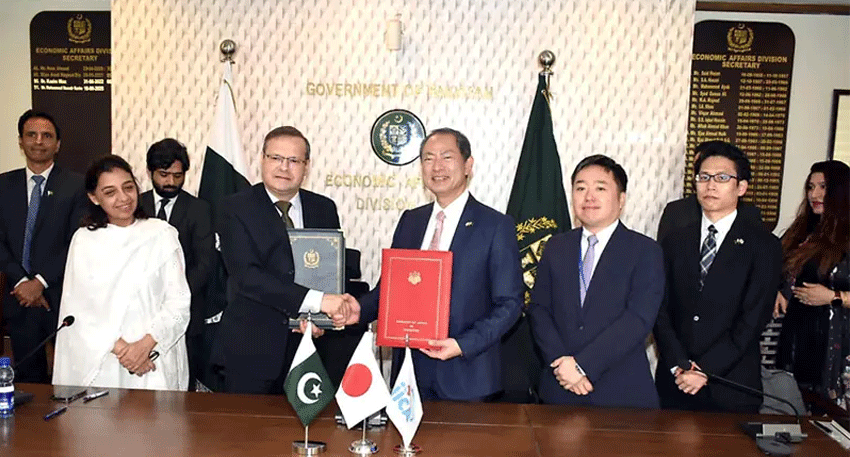
The grant, worth 2.58 billion Japanese yen, will support a project aimed at improving flood defences along the Indus River. The initiative is designed to reduce the risk of future river floods and protect people whose homes and livelihoods are vulnerable.
The agreement was formally signed at the Ministry of Economic Affairs through an exchange of notes and a grant agreement between Pakistan and Japan.
The project will focus mainly on repairing and strengthening the Old Abad Bund in Larkana, located along the right bank of the Indus River. The embankment is considered important for protecting nearby communities from rising river water.
@GovtofPakistan and @JapanGov signed the Grant Agreement, for the “Project for Flood Protection and Dike Improvement on Indus River in Sindh Province”, aimed at strengthening #flood protection #infrastructure and enhancing resilience of vulnerable communities in #Sindh. 1/7 pic.twitter.com/NDrq1H6d1B
— Ministry of Economic Affairs (@eadgop) September 7, 2026
Japan supports stronger flood defences
The new funding is expected to help improve infrastructure in an area that faces repeated flood risks. Stronger embankments can provide an important line of defence when river levels rise during heavy rainfall and extreme weather.
The project is part of wider efforts to improve Pakistan’s ability to deal with climate-related disasters. Sindh has remained particularly exposed to flooding because of its location along the Indus River and the large number of communities living in flood-prone areas.
The investment will focus on practical infrastructure rather than short-term emergency assistance. By improving the condition of the Old Abad Bund, authorities hope to reduce the damage that future river floods could cause.
The project also has an economic side because flooding can damage homes, farmland, roads and other important facilities. Protecting these assets can help communities recover faster and reduce financial losses after major floods.
Pakistan welcomes Japanese assistance
Akamatsu Shuichi, Japan’s ambassador to Pakistan, and Mohammad Humair Karim Kidwai, secretary of the Ministry of Economic Affairs, signed the agreement.
Kidwai thanked Japan for its continued development assistance and support for Pakistan’s economic and social development. He also praised the long-term cooperation between the two countries.
He highlighted the contribution of the Japan International Cooperation Agency, commonly known as JICA, particularly its technical knowledge and experience in different development projects.
Pakistan and Japan have worked together on several development initiatives over the years. The latest agreement adds flood protection to their ongoing cooperation, with a focus on strengthening infrastructure in a vulnerable part of Sindh.
JICA to support flood-prone areas
Sugawara Takayuki, a senior JICA representative, welcomed the progress that allowed the project to reach the signing stage.
He appreciated the cooperation of both the federal and provincial governments. He also reaffirmed JICA’s commitment to improving flood protection infrastructure in areas of Sindh that face repeated flooding.
The support is particularly important as Pakistan continues to face the effects of extreme weather and climate-related disasters. Heavy rains and flooding have repeatedly affected communities, agriculture and infrastructure across the country.
Improved flood protection can help reduce these risks, although infrastructure alone cannot eliminate the threat. Better early-warning systems, emergency planning and community preparedness are also important parts of disaster protection.
Also Read:Goods transport fares rise 5% after fuel price hike
Project expected to protect local livelihoods
The project is expected to benefit people living close to the Old Abad Bund and other vulnerable areas around the Indus River. Stronger flood infrastructure could provide greater protection for homes, agricultural land and local businesses.
For communities that depend on farming and river-based economic activity, flood damage can have long-lasting effects. Preventing or reducing that damage can help families maintain their livelihoods and avoid heavy rebuilding costs.
The Japanese grant therefore represents more than an infrastructure investment. It is also aimed at improving climate resilience and reducing the impact of future natural disasters.
Pakistan’s authorities will now work with Japanese partners on implementation of the project. The success of the initiative will depend on effective construction, regular maintenance and coordination between relevant institutions.


