

FBR expands AI checks on tax returns, new system raises scrutiny
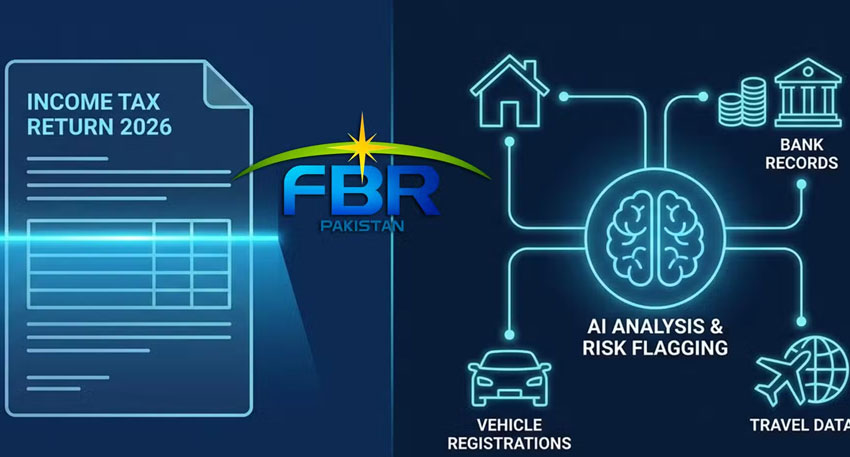
AI system to cross-check taxpayer information
The Federal Board of Revenue (FBR) is expanding its use of artificial intelligence and data analytics to examine tax declarations and identify unusual patterns. The system compares taxpayer information with data from multiple government and other sources.
The checks can include property transactions, bank information, vehicle registrations and travel records. The system can also compare taxpayers with people having similar profiles to identify inconsistencies in declared income, assets and other information.
FBR said the system was initially tested on selected income tax and sales tax returns. It has now been extended to Income Tax Returns for Tax Year 2026 and subsequent sales tax returns.
Risk flags do not mean tax fraud
An AI-generated risk flag does not automatically establish tax evasion or fraud. Instead, a flagged case may be selected for further examination, audit or assessment under the relevant law.
The move is linked to FBR’s wider shift toward technology-based and risk-based tax administration. The government has also established the National Faceless Centre (NFC) in Islamabad, where cases are selected through a computerized risk-based system and assigned automatically to officers.
Under the new faceless system, notices, replies and hearings are handled electronically through FBR’s IRIS system, while different officers can handle audit, assessment and quality review. FBR says the approach is intended to reduce discretionary intervention and improve consistency and transparency in tax proceedings.


