

11 fishermen released from India after years reunite with Karachi families
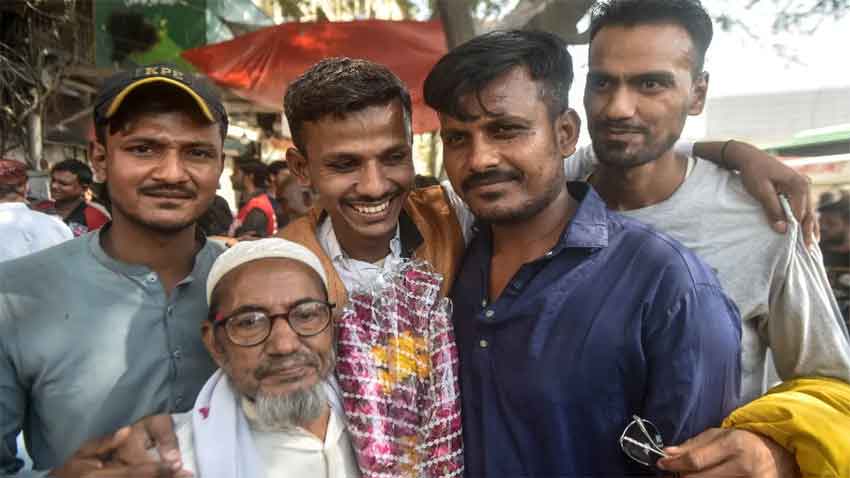
The men had unknowingly entered Indian waters while fishing and were arrested by Indian authorities. After spending between four and nine years behind bars, they finally returned home to meet their loved ones.
Emotional reunion after years of separation
The fishermen were handed over to Pakistani authorities at the Wagah Border around two months ago. On Friday morning, the Edhi Foundation brought them from Lahore to Karachi by ambulance.
They reached the Edhi Centre near Merewether Tower at around 11:30am, where their families had been waiting for them. The reunion was emotional as several fishermen met their relatives after years of separation.
Kamal Hassan Bengali, a resident of Machhar Colony, had spent eight years in an Indian jail. He returned home to find that several family members had married during his absence, while his mother had passed away.
“The day our boat was captured by the Indian coast guard was the day my mother passed away. I only learned about her passing through a letter which reached me three years later,” Kamal told Dawn, as he held his eight-year-old niece Areeba close.
“I am meeting her (Areeba) for the first time,” he added, smiling through tears.
Kamal explained that their boat had crossed into Indian waters after its engine stopped working. Without power, the boat drifted across the maritime boundary.
His sister Manzoora said the family had been waiting for his return and wanted to help him settle down. “I will get him married soon now that he is back home,” she said.
Fishermen describe difficult days in Indian jails
Noor Nabi Bengali, who was on the same boat as Kamal, recalled the difficult conditions they faced during their imprisonment. He said the food provided in jail was often unpleasant and sometimes spoiled.
“We were given bad food. The lentils and plain rice or the potato and cauliflower curry that we were fed in jail would stink sometimes because it had gone bad,” he said.
Khamiso Siddiq Mallah, from Shah Bandar, spent almost four years in Indian custody. Now 60, he said the experience had changed his plans and he no longer wanted to work at sea.
“I will become a labourer, but I will never go back to sea,” he said.
Abdul Rehman, a resident of Korangi, spent nine years in an Indian jail. He said the painful memories of imprisonment had made it difficult for him to remember even the name of his fishing boat.
“I don’t remember the name of my boat,” he said when asked its name.
“I only remember the horrible jail food and the lonely days I spent behind bars in India,” he shared.
He also complained about the behaviour of prison staff towards Pakistani prisoners. “The attitude of the jail staff toward us Pakistanis never let me forget for a minute that we were in an enemy country. They [treated] us worse than animals.”
Families and children await fishermen’s return
Mehboob Ali Mullah, from Badin, spent three-and-a-half years in an Indian prison. He said returning to Pakistan was only the first part of his journey because he still had to reach his village and meet his children.
“My journey doesn’t end here. I still have to travel to my village in Badin,” he said. “I have three children back home whom I cannot wait to see.”
For many of the fishermen, meeting their families was the biggest moment after years of uncertainty and separation. Their return has also given their relatives an opportunity to rebuild family relationships that were affected by their long absence.
Fishermen consider changing their work
Basheer, from Machhar Colony, said fishing was the only skill he knew and he needed it to earn a living. However, he plans to avoid fishing in areas close to the Indian maritime border.
“But what I’ll do is not ever fish in Sindh. I’ll fish in Balochistan, which doesn’t touch the Indian border,” he said.
He also said he had lost around 70 pounds during his imprisonment and wanted to regain his health after returning home. “Now that I’m back in my country, I will eat good, healthy food to gain back the 70 pounds that I lost while in Indian jail,” he added.
The fishermen’s return has brought happiness to their families after years of painful separation. However, their experiences also show the human cost of accidental border crossings while fishing.
Many fishermen depend on the sea for their livelihood and may not always realise when their boats cross international boundaries. Better awareness, safety equipment and communication systems could help prevent similar incidents in the future.
Also read: Quarterly gas pricing bill introduced in Senate after daily electricity shocks


