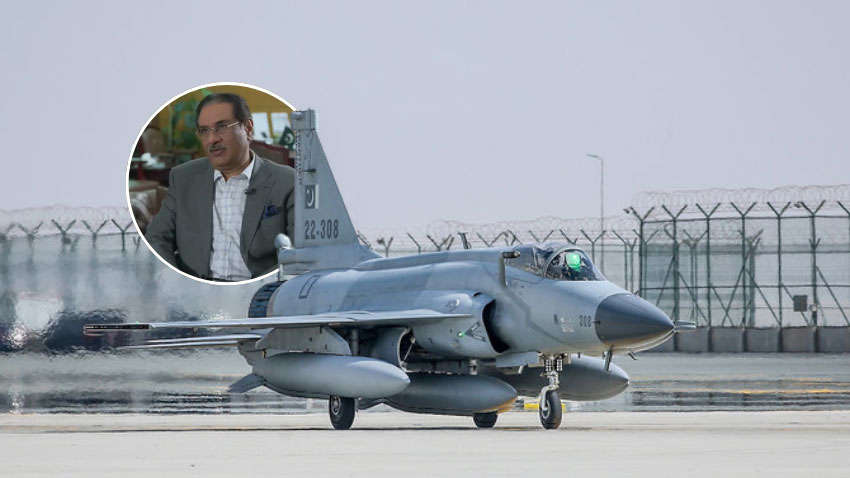
Speaking to BBC Urdu, the minister said negotiations were underway with more than one country. Many countries, he said, have shown serious interest in the aircraft. Defence Production Minister Raza Hayat Harraj refused to name any country or share details about the stage of talks.
He said these matters were sensitive and closely guarded. According to him, the buyers will become known only after the jets are officially exported. The minister stressed that Pakistan would only sell JF-17 jets to friendly countries. He said this was important to ensure the aircraft were never used against Pakistan.
Also Read: President Zardari arrives in Bahrain on a 4-day official visit
He also confirmed that China is fully involved in any export deal. Since the JF-17 is jointly developed by Pakistan and China, Beijing remains part of all discussions and agreements.
Harraj said the jets proved their strength during last year’s four-day conflict with India. He claimed air forces around the world closely watched their performance and praised their capabilities.
Price, the minister said, is one of the JF-17’s biggest advantages. While fighter jets globally can cost between $250 million and $350 million, the JF-17 is much cheaper. He said its price is around $40-50 million, depending on features, and can rise with added systems.
China-based expert Einar Tangen told BBC Urdu that most key technology is likely controlled by China. He said any export deal would be a joint agreement, with China acting as the senior partner.
Also Read: Four terrorists killed during an IBO in Kalat: ISPR
Interest in the JF-17 has increased in recent weeks. Pakistan and Bangladesh air chiefs recently discussed possible procurement. The Pakistan Air Force chief also visited Iraq, where a strong interest in the jet was shown.
Reuters earlier reported that Pakistan and Saudi Arabia were discussing turning about $2 billion in Saudi loans into a JF-17 deal. Indonesia’s defence minister also visited Pakistan and expressed a desire to expand defence cooperation.
Harraj avoided sharing details of a defence pact signed with Saudi Arabia in September 2025. He said the agreement involved top leadership and could not be discussed publicly. Bloomberg later reported that Turkiye was also seeking to join the pact.