

IHC suspends local govt elections ahead of December 20 polls
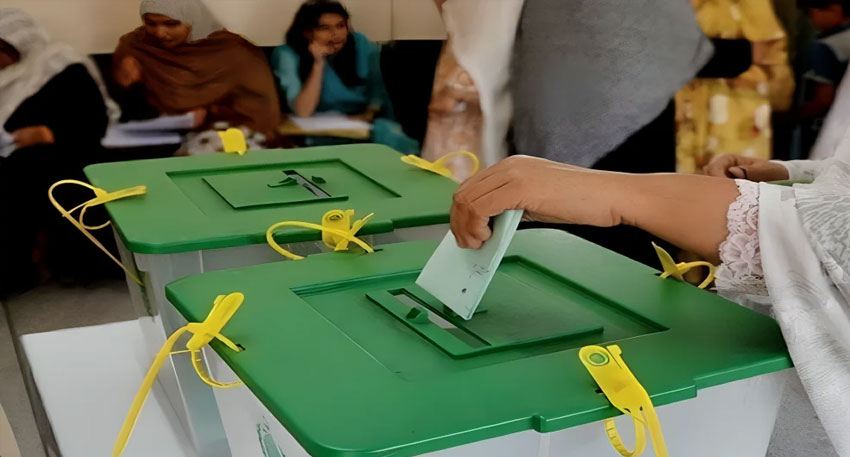
IHC suspends election schedule
The Islamabad High Court (IHC) has stopped the upcoming local government elections in the federal capital. The decision puts the Election Commission of Pakistan’s (ECP) latest election schedule on hold until the next court hearing.
The elections were scheduled to take place on December 20, 2026. Justice Umair Majeed Malik issued the interim order while hearing a petition filed by Chaudhry Amjad Ali.
The petitioner had challenged the ECP’s October 21 order and election schedule. He argued that elections could not legally take place until the status of constituency boundaries was properly decided.
“Operation of the impugned order dated Oct 21, 2026, and the impugned election schedule dated Oct 21, 2026, as revised by the Election Commission, shall remain suspended until the next date of hearing,” the court order read.
The court also issued notices to the respondents and directed them to submit their reports and detailed responses before the next hearing. The case will be heard again on November 26, 2026.
Legal dispute over Islamabad’s local government system
The petitioner’s lawyers argued that the ECP must conduct elections fairly and according to the Constitution. They referred to Articles 140-A(2), 218(3) and 219(d), which explain the responsibilities of the election commission.
The main issue concerns changes in Islamabad’s local government laws between 2015 and 2026. According to the lawyers, these changes created confusion about the number of local councils and the boundaries of electoral constituencies.
Under the Islamabad Capital Territory Local Government Act 2015, the capital was supposed to have one Metropolitan Corporation and 125 Union Councils. Each Union Council was divided into nine wards, and the delimitation process under this system began in December 2024.
The ECP announced an election programme on December 26, 2025, but later withdrew it. After that, the Islamabad Capital Territory Local Government Ordinance 2026 introduced major changes to the local government structure.
The new ordinance proposed three Town Corporations instead of one Metropolitan Corporation. It also changed the method of forming and dividing Union Councils, removed the nine-ward system and increased their number from 125 to 130.
Expiry of ordinance raises questions over constituencies
The ECP issued a revised delimitation schedule on August 25, 2026, and completed the process by publishing the final list of 130 Union Councils on October 14. However, the Local Government Ordinance 2026 later expired after receiving a single 120-day extension.
Under Article 89 of the Constitution, the expiry of the ordinance meant that the original Local Government Act 2015 became effective again. The petitioner’s lawyers argued that the ECP then announced elections under the old law without completing the required delimitation process.
They said the new constituency boundaries were prepared under the 2026 ordinance and could not automatically be used for elections under the restored 2015 law. The old law required 125 Union Councils, each divided into nine wards, along with one Metropolitan Corporation.
The lawyers maintained that fresh constituency delimitation and updated electoral rolls were necessary before holding the elections. They also warned that conducting polls without completing these legal requirements could violate the Constitution and election laws.
They further argued that holding elections without resolving the legal issues could waste public money. After hearing the initial arguments, the IHC decided that the matter required further examination and suspended the ECP’s election order.
Islamabad elections face repeated delays
Islamabad’s local government elections have faced repeated delays since the previous local government completed its term in February 2021. The ECP has announced several election schedules, but different legal and administrative issues have prevented the polls from taking place.
The delimitation of constituencies and Union Councils has been carried out six times, while the election schedule has been announced four times. Changes in local government laws and court orders have been among the main reasons for these delays.
On Thursday, Chief Election Commissioner Sikandar Sultan Raja accused the federal government of trying to sabotage the Islamabad local government elections. His statement came just a day before the IHC suspended the latest election schedule.
The ECP had decided to hold the elections under the 2015 Local Government Act, which it considered the applicable law. Under this arrangement, elections would take place in 50 constituencies, followed by the selection of the mayor and deputy mayors.
The latest court order has created further uncertainty over when Islamabad residents will be able to elect their local representatives. The next hearing on November 26 is expected to provide more clarity about the legal position and the future election schedule.
The suspension highlights the legal and administrative problems surrounding Islamabad’s local government elections. Repeated changes in laws and constituency boundaries have made the process difficult to complete.
Local government elections have already been delayed for several years. The authorities now need to resolve the legal issues and agree on a clear system so residents can finally elect their local representatives.
Also read: Pakistan inflation reaches 11.21% as food and LPG prices rise


