
JD Vance has confirmed that US-Iran talks in Islamabad ended without a deal after 21 hours of intense negotiations, with Washington now placing a “final offer” on the table for Tehran.
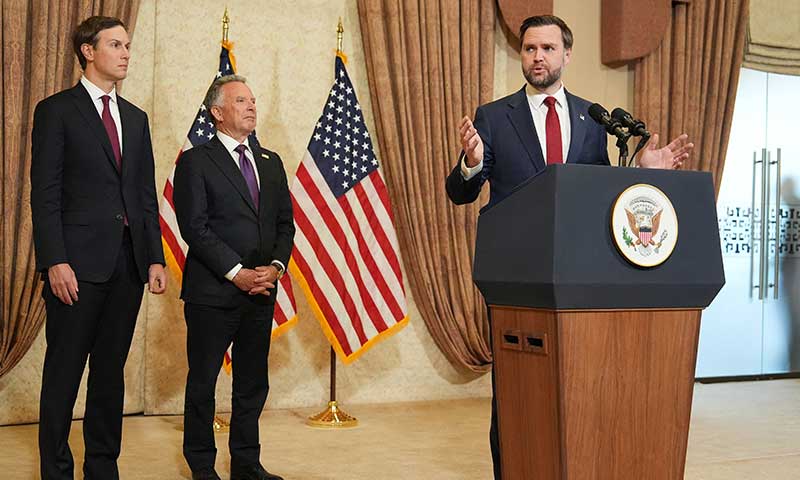
Speaking at a press briefing after the marathon session, Vance described the outcome as disappointing, saying both sides held “substantive discussions” but failed to reach a breakthrough. “The bad news is that we have not reached an agreement,” he stated, adding that the setback would impact Iran more than the United States.
The high-stakes US-Iran negotiations focused on key issues including regional security, sanctions relief, war-related damages, and the future of Iran’s nuclear program. According to Vance, the United States entered the talks in good faith with clear conditions, but Iran declined to accept the proposed terms.
A central sticking point remained Iran’s nuclear ambitions. Vance stressed that Washington is seeking firm, long-term assurances that Tehran will not pursue nuclear weapons or maintain the capability to develop them rapidly. “We haven’t seen that yet,” he said, underlining the lack of a clear commitment from the Iranian side.
.@VP in Islamabad, Pakistan: "We’ve had a number of substantive discussions with the Iranians. That’s the good news. The bad news is that we have not reached an agreement — and I think that’s bad news for Iran much more than it's bad news for the United States of America." pic.twitter.com/RLIQ30btO5
— Rapid Response 47 (@RapidResponse47) April 12, 2026
Also Read: Iran claims US ready to give Tehran $6 billion amid Pakistan talks
Despite the deadlock, the US delegation left Islamabad with what Vance described as a “final and best offer,” placing the next move firmly in Iran’s hands. He indicated that while this round ended without agreement, diplomacy has not collapsed entirely and could continue depending on Tehran’s response.
The talks, which lasted more than 21 hours, involved continuous exchanges of messages and written drafts between both sides. Iranian officials earlier stated that technical teams had worked on draft proposals and that discussions could resume after a pause under Pakistan’s mediation.
Vance also revealed that US negotiators remained in constant contact with Donald Trump throughout the process, consulting multiple times during the negotiations to ensure alignment with Washington’s broader strategic objectives.
Following the conclusion of the talks, the US delegation departed Islamabad. Senior Pakistani officials, including Asim Munir and Ishaq Dar, saw off the delegation, highlighting Pakistan’s key role in facilitating the diplomatic engagement.
Shehbaz Sharif had earlier praised the constructive dialogue between both sides, calling it an important step toward lasting peace and reaffirming Pakistan’s commitment to continued mediation.
The outcome of the Islamabad talks underscores ongoing challenges in US-Iran diplomacy, particularly over nuclear commitments and mutual trust. Analysts warn that failure to reach an agreement could prolong tensions, but continued dialogue leaves room for a possible breakthrough in future rounds.