
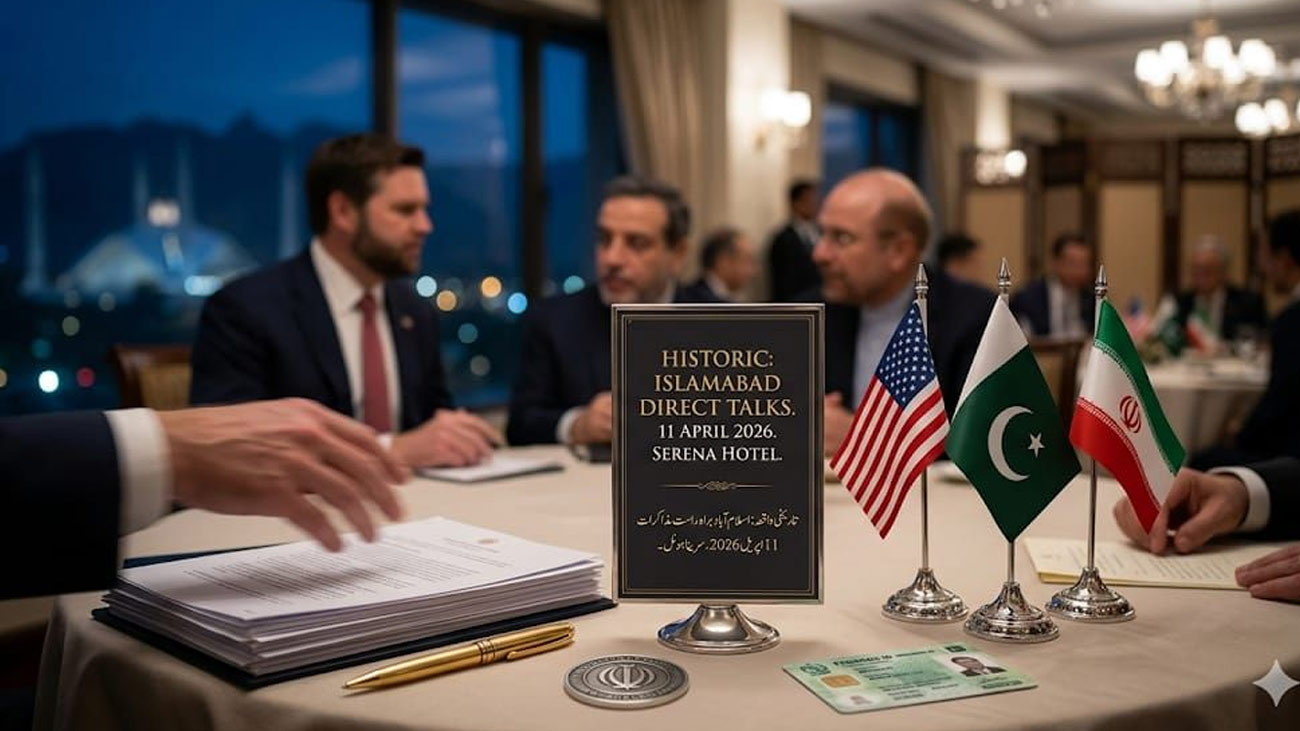
The latest round of US-Iran talks in Islamabad has ended without a final agreement, with Iran stating that the success of diplomacy depends on the “seriousness and good faith” of the other party.
In an official statement, the Iranian Foreign Ministry confirmed that extensive discussions took place over the past 24 hours, covering key issues such as the Strait of Hormuz, Iran’s nuclear program, war reparations, sanctions relief, and the broader regional situation.
Iranian officials emphasized that the complete end of conflict and long-term regional stability were also part of the negotiations agenda, highlighting the complexity of the discussions.
However, Tehran made it clear that the failure of the US-Iran negotiations was largely due to what it described as excessive and unrealistic demands from Washington. Iranian media reports suggested that US conditions created obstacles to reaching a joint framework or agreement, particularly on sensitive issues like nuclear rights and control over strategic waterways.
According to Iranian authorities, the United States sought concessions that it was unable to achieve during previous conflicts, further complicating the path to a deal. Despite the lack of agreement, Iran maintained that the situation in the Strait of Hormuz would remain unchanged.
Also Read: US Iran talks: JD Vance says no agreement reached after 21 hours in Islamabad
The statement also stressed that for diplomacy to succeed, the opposing side must avoid “maximum and unlawful demands” and recognize Iran’s legitimate rights. Tehran reiterated that meaningful progress depends on mutual respect and balanced negotiations.
The outcome follows confirmation from JD Vance that the talks concluded without a deal after prolonged discussions, with Washington presenting its own terms while seeking firm commitments on Iran’s nuclear program.
The Islamabad talks have drawn global attention as a major attempt to reduce tensions between the two countries. While no breakthrough was achieved, both sides have signaled that dialogue may continue, keeping diplomatic channels open for future engagement.
Analysts note that the sharp differences over nuclear commitments, sanctions, and regional influence remain key barriers in US-Iran diplomacy, raising uncertainty over whether future negotiations can bridge the gap.