

Justice Mohsin Akhtar Kayani resigns over concerns about judicial independence
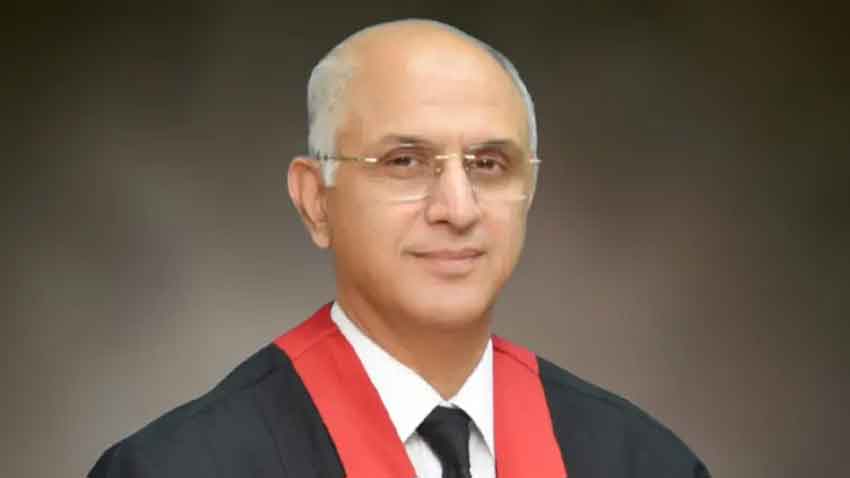
Justice Kayani cites concerns over judicial independence
Lahore High Court (LHC) Justice Mohsin Akhtar Kayani has submitted his resignation to the president of Pakistan, citing personal reasons, health concerns after surgery and “reasons of conscience”. He said changes introduced through the 26th and 27th Constitutional Amendments had weakened the independence of the high courts.
In his letter, Justice Kayani said serving at the Islamabad High Court (IHC) and LHC had been a privilege. He added that he had decided more than 23,000 cases during his judicial career while trying to protect constitutional rights and deliver justice fairly.
The judge expressed concern about what he described as the executive’s increasing influence over judicial institutions, including the appointment and transfer of judges. He said such interference had damaged public trust in the independence of courts and the fairness of legal proceedings.
Judge says ordinary litigants are suffering
Justice Kayani said ordinary people seeking justice were among those most affected by problems in the judicial system. He argued that their needs were often overlooked while other groups benefited from a system meant to serve the public.
“In these circumstances, my conscience does not permit me to continue on the bench. This is a painful decision, but it reflects my conviction that judicial office must remain inseparable from independence, fidelity to the Constitution, and the protection of human dignity.
“I, therefore, consider that the time has come for me to lay down my robes and return to legal practice, through which I intend to continue serving the people, protecting their rights, and promoting legal awareness,” he wrote.
He ended the letter by thanking his teachers, fellow judges and family members for their guidance and support. His resignation comes well before his scheduled retirement on February 10, 2032.
Transfer and seniority disputes preceded resignation
Justice Kayani was previously a senior judge at the IHC and had been expected to become its chief justice. He was transferred to the LHC in April and assigned to its principal seat in Lahore, where he was placed 12th on the seniority list.
His earlier challenge to the transfer of judges between high courts formed part of a wider legal dispute over judicial appointments and administrative authority. The Supreme Court’s constitutional bench upheld transfers to the IHC, including that of Chief Justice Sardar Muhammad Sarfraz Dogar.
Justice Kayani and other senior IHC judges later approached the Supreme Court over the administrative powers exercised by Chief Justice Dogar. They alleged that the office had become a “monocracy” and that judges could be left out of court rosters at will.
Days before his resignation, Justice Kayani returned to the Rawalpindi registry to preside over a single bench following a change in the LHC’s duty roster. Despite his earlier senior position at the IHC, the new roster assigned him only to that single bench at the Rawalpindi registry.
Judicial career and earlier allegations
Justice Kayani was among six IHC judges who wrote to the Supreme Judicial Council in March 2024, alleging interference by intelligence agencies in judicial affairs. Their letter described alleged pressure on judges, including claims involving the abduction and torture of relatives and secret surveillance inside their homes.
He began his legal career after studying at FG Boys High School and FG College for Men in Islamabad, graduating in 1989. He later earned an LLB from the University of Punjab in 1994, an MA in Political Science in 1996, an LLM from Karachi University in 2003 and an MSc in Pakistan Studies in 2005.
He was enrolled as a district courts advocate in 1995, became a high court advocate in 1997 and joined the Supreme Court bar in 2009. He was appointed an IHC judge on December 23, 2015, before being transferred to the LHC on April 29, 2026.
Justice Kayani also held positions in the Islamabad District Bar Association and served as president of the Islamabad High Court Bar Association from 2013 to 2014. The LHC website notes that he handled important cases, including those involving enforced disappearances, and supported legal reforms in this area.
Justice Kayani’s resignation has brought renewed attention to concerns about judicial independence, judges’ transfers and control over court assignments. His statements reflect his own assessment of the system, while the wider debate centres on how courts can remain independent and ensure fair access to justice.
Also read: Government Hajj scheme second instalment payment starts tonight


