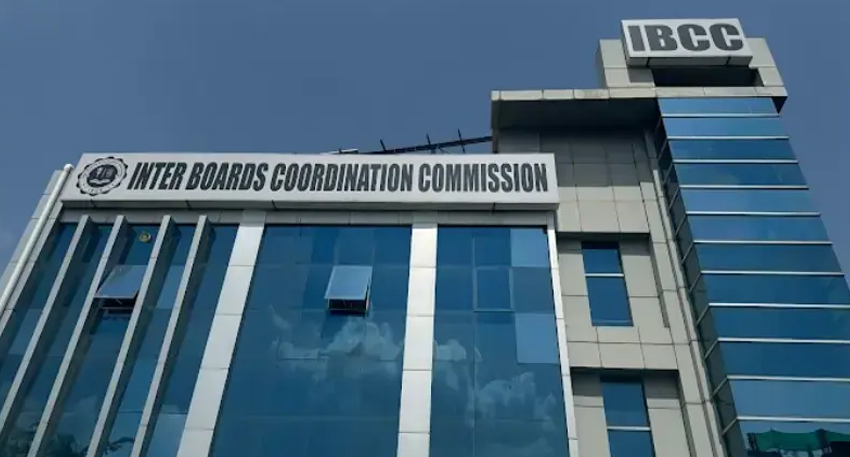
The new policy will take effect from the SSC examinations scheduled for 2026, expanding academic pathways for students across Pakistan.
According to an official notification issued after the IBCC’s 183rd meeting held on December 4–5, 2025, students who have passed SSC (Arts Group) will be eligible to register for HSSC Pre-Medical and Pre-Engineering from the first annual examinations of 2026 onwards. The decision was taken after consultations with key regulatory bodies, including the Pakistan Engineering Council (PEC), Pakistan Medical and Dental Council (PMDC), the Higher Education Commission (HEC), National Curriculum Council, and provincial curriculum authorities.
The IBCC stated that while Arts students are now eligible to enter science streams, education boards may introduce safeguards such as minimum merit criteria, aptitude or placement tests to maintain academic standards. However, the final authority to implement such measures will rest with individual boards, subject to approval from their respective governing bodies.
Also Read: HEC introduces blockchain degree attestation — Manual verification ends!
IBCC Executive Director Dr Ghulam Ali Mallah said the policy aims to remove rigid barriers that previously limited students’ academic choices. He explained that any student capable of meeting the academic demands of Pre-Medical, Pre-Engineering or ICS should be allowed to compete. “This decision opens new academic pathways and better aligns Pakistan’s education system with students’ abilities rather than fixed subject streams,” he noted.
The reform also includes a significant change for O/A Level students, as those passing two major science subjects will now receive equivalence in the science group instead of humanities, further expanding access to medical, engineering and computer science education.
During the meeting, the IBCC also discussed a broader proposal to abolish the division between Arts and Science at the matric level, replacing it with a single Secondary School Certificate (SSC) offering flexible elective subject choices. However, this proposal will undergo further deliberation before any final approval.
Education officials have termed the move a major policy shift, expected to benefit thousands of students nationwide by widening access to professional fields such as medicine, engineering and computer science. The decision is aligned with Pakistan’s long-term goals of improving higher education access and workforce development.
Separately, authorities have announced that matric and intermediate examinations in 2026 will be held after Eid ul Fitr, providing relief to students during Ramadan and the Eid holidays.