

Punjab vehicle emission testing: Full guide to fees, centres and deadlines
Why vehicle emission testing is important
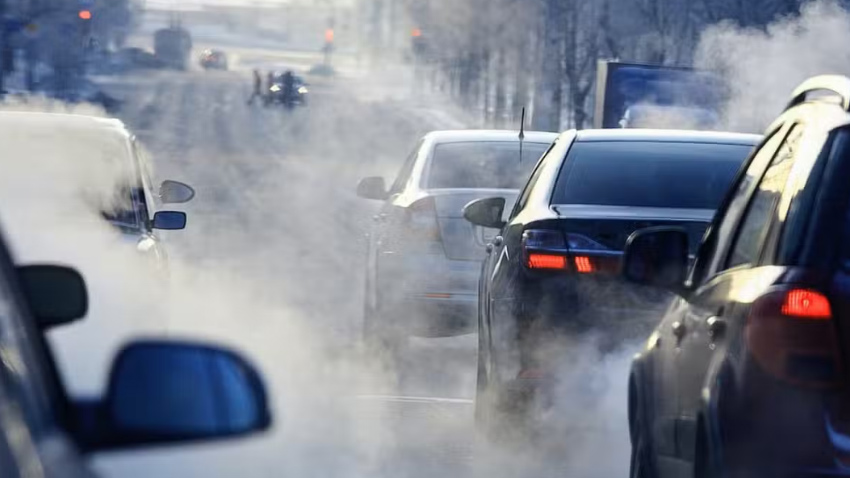
Smog has returned to Punjab, creating serious air quality problems across the province. Lahore has remained among the most polluted cities in the world, with its average PM2.5 pollution level reported at eight times the World Health Organisation’s (WHO) recommended limit.
The Punjab government has introduced several measures to control pollution, including vehicle emission testing. The purpose is to identify vehicles releasing excessive smoke and ensure they meet environmental and road safety standards.
Environment Protection Agency (EPA) spokesperson Sajid Bashir told Dawn that around 300,000 vehicles underwent emission testing last year. He said the responsibility has now been transferred back to the Transport Department, which is managing the programme through the Private Vehicle Inspection and Certification System (PVICS).
According to the Punjab Transport Authority, the system checks whether vehicles meet required mechanical and environmental standards. Here is a step-by-step guide to help motorists understand the process.
Who needs an emission certificate and how much will it cost?
Before visiting a testing centre, vehicle owners should check whether their vehicles are required to obtain an emission certificate. Some motor cars are exempt for a specific period based on their engine capacity and manufacturing date.
Vehicle owners enjoy specific exemption periods based on engine capacity and manufacturing date, such
1. as five years for engines up to 1,000cc,
2. six years for engines from 1,001cc to 2,000cc,
3. and seven years for engines above 2,000cc.
Motorists with non-exempt vehicles are required to pay a testing fee according to their engine size, with the official fee schedule ranging from Rs500 to Rs2,000.
Specifically, testing costs Rs500 for vehicles up to 1,000cc, Rs800 for engines above 1,000cc to 1,500cc, and Rs1,000 for those above 1,500cc to 2,500cc. Furthermore, the fee is set at Rs1,500 for vehicles with engines above 2,500cc to 4,500cc, and increases to Rs2,000 for vehicles exceeding 4,500cc in capacity.
Vehicle owners must bring their original registration documents when visiting a testing centre. Carrying the original Computerised National Identity Card (CNIC) is also recommended.
Where to get your vehicle tested in Punjab
Motorists must visit an authorised vehicle emission-testing centre with their vehicles and required documents. The Punjab government has established 28 testing centres in Lahore under a public-private partnership programme.
Testing facilities are also available in Sheikhupura, Rawalpindi, Attock, Bahawalpur, Dera Ghazi Khan, Gujranwala, Rahim Yar Khan, Sahiwal and Sargodha. Other cities include Gujrat, Mandi Bahauddin, Toba Tek Singh, Mianwali, Vehari, Lodhran, Chiniot, Nankana Sahib, Khanewal, Muzaffargarh, Chakwal, Hafizabad, Pakpattan, Layyah and Jhang.
How the testing process works
At the testing centre, officials first enter the vehicle’s registration details into the computer system. They also take a photograph of the vehicle and attach it to its registration record.
The vehicle is then connected to special testing equipment to measure its exhaust emissions. Separate procedures are used for petrol and diesel vehicles, with machines checking emissions at different engine speeds.
The process usually takes around two to three minutes. The system records and generates the results automatically without manual interference.
The inspection also checks the vehicle’s overall condition and safety standards. These checks include brakes, wheel alignment, suspension, headlights, tyres, mechanical condition, exhaust emissions and noise levels.
Vehicles that meet the required standards receive a fitness certificate. If a vehicle fails, its owner must repair the identified problems and bring it back for another inspection.
Motorists only have to pay half of the original testing fee for the second inspection. Once testing is completed, the machine automatically prepares a report and shares its digital copy with the EPA, Punjab Transport Authority and National Engineering Services Pakistan.
Vehicles that pass receive an emission pass sticker or certificate. The certificate remains valid for one year, and owners should keep it as proof of compliance.
New deadline and possible fines for motorists
The Punjab government initially announced October 15 as the deadline for vehicle emission testing. It later extended the date to November 15 before moving it further to December 31.
Motorists who fail to obtain the required emission certificate after the deadline may face traffic challans and fines. Vehicle owners should complete the process within the extended period to avoid penalties.
There is also an important difference between an emission certificate and a vehicle fitness certificate. These are two separate requirements, and obtaining one does not automatically fulfil the other.
Public service and goods transport vehicles must obtain a statutory fitness certificate under the Punjab Motor Vehicle Ordinance, 1965, and Motor Vehicles Rules, 1969. Commercial vehicles must also undergo a fitness inspection every six months, even if they have already passed the emission test.
Vehicle emission testing is an important step towards controlling air pollution in Punjab. However, motorists need clear information about testing fees, exemptions, authorised centres and deadlines.
The government must also ensure that testing facilities are accessible and the process remains transparent. Regular inspections, proper vehicle maintenance and public cooperation can help reduce harmful emissions and improve air quality.
Also read: Punjab launches crackdown on hidden number plates


