
Pakistan’s Auto Policy 2026-31 put on hold after dispute with car makers
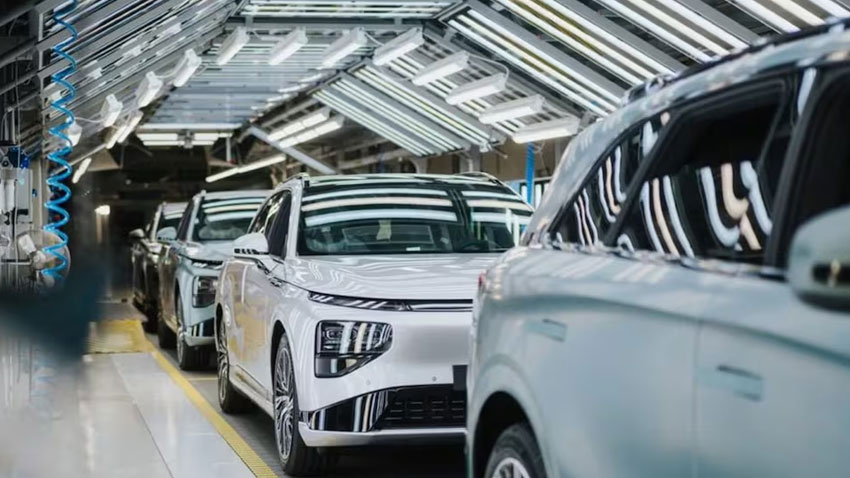
The federal government has withdrawn the proposed Auto Policy 2026-31 and restarted the policy-making process. The decision came after leading automobile manufacturers raised concerns about the draft policy’s focus on electric vehicles.
The Ministry of Industries and Production had prepared the new policy after consulting different stakeholders. Its main goal was to speed up the shift to electric vehicles and reduce Pakistan’s dependence on imported petroleum products.
The government’s push for electric vehicles became more important after recent tensions in the Middle East raised concerns about global oil supplies. Pakistan imports nearly 80% of its petroleum products, making the country vulnerable to changes in international fuel prices.
Conventional car manufacturers opposed the proposed incentives for electric vehicles. They argued that the policy gave EVs major benefits without providing a practical roadmap for companies already producing petrol and hybrid vehicles.
Sources said leading automakers met Prime Minister Shehbaz Sharif and requested a review of the draft policy. After the meeting, the prime minister directed Deputy Prime Minister Ishaq Dar to supervise the preparation of a revised policy through a newly formed committee.
The delay has already affected both manufacturers and customers. The expiry of the Auto Industry Development and Export Policy 2021-26 on June 30, 2026 automatically ended tax concessions for hybrid vehicles.
Also read: New Honda CD70 surprises buyers as graphics receive a makeover
From July 1, the General Sales Tax on hybrid and plug-in hybrid vehicles increased from 8.5% to 25%. As a result, these vehicles now face the same GST rate as conventional petrol and diesel vehicles.
The higher tax rate forced Toyota and Honda to increase prices of some hybrid models by more than Rs1.3 million. Some manufacturers also temporarily stopped vehicle invoicing and deliveries because of uncertainty over the new policy.
The Pakistan Association of Automotive Parts & Accessories Manufacturers (PAAPAM) expressed disappointment over the delay. However, the association said it supports Pakistan’s long-term move toward electric mobility.
PAAPAM has suggested a gradual transition instead of a rapid shift to electric vehicles. It proposed keeping an 18% GST on hybrid vehicles until Pakistan develops enough EV charging stations and a local electric vehicle supply chain.
The association also urged the government to link EV incentives with higher localisation targets and technology transfer. It recommended encouraging local production of batteries, electric motors and electronic components.
Industry representatives also requested financial assistance to help existing auto parts manufacturers upgrade their factories for EV production. They said this would protect billions of rupees already invested in Pakistan’s conventional automotive sector.
They further warned that giving generous incentives to imported EV kits without localisation requirements could hurt local manufacturing. According to industry representatives, such a move could threaten thousands of jobs and weaken Pakistan’s automotive vendor industry.
The revised Auto Policy is expected to balance the government’s clean energy goals with the concerns of local manufacturers and investors. Officials also hope the new framework will provide greater certainty for Pakistan’s automotive sector.
The government now faces the challenge of supporting electric vehicles without hurting the existing auto industry. A balanced policy could attract investment, protect jobs and help Pakistan move towards cleaner transport in a practical way.