

State Bank says Pakistan will need $331bn to fund climate action by 2030
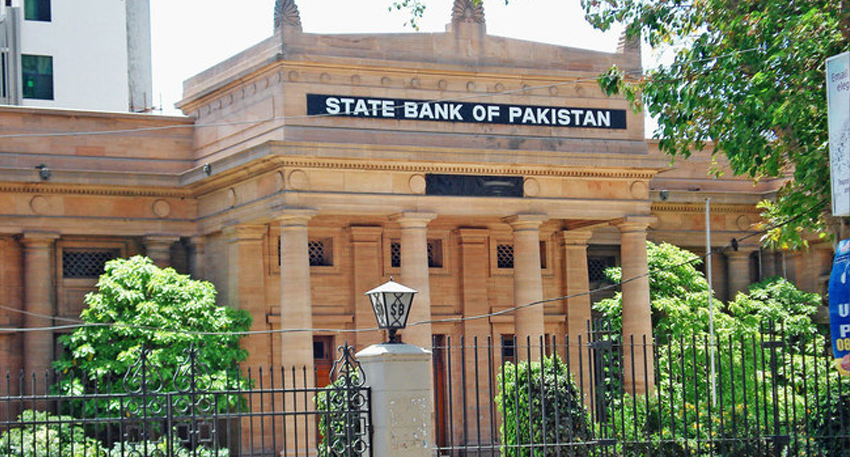
The State Bank of Pakistan, in its latest report, projected that the country will need approximately $47 billion annually from 2024 through 2030 to address climate-related challenges.
Drawing on figures from the Climate Policy Initiative (CPI), the report said the funding would support both climate adaptation and mitigation efforts aimed at safeguarding infrastructure, protecting livelihoods and sustaining long-term economic development.
The projected annual requirement is equivalent to nearly 10% of Pakistan's cumulative GDP over the same period.
The central bank also underscored Pakistan's exposure to climate risks, noting that the country was the 15th hardest-hit nation by climate-related disasters between 1995 and 2024, despite accounting for only around 1% of global greenhouse gas emissions.
The report said Pakistan is expected to require $200 billion to $348 billion by 2030 to achieve climate-resilient development and fulfil its Nationally Determined Contributions (NDCs).
Also Read: England edge Mexico in thriller to book Norway clash
Looking further ahead, the Pakistan Climate Prosperity Plan outlines an investment target of $1.6 trillion by 2050 to support the country's long-term climate objectives.
The State Bank of Pakistan said climate-related disasters have already imposed a heavy economic burden on the country, with cumulative losses estimated at $58.8 billion.
It noted that extreme weather events between 1992 and 2021 caused damages worth $29.3 billion, while the devastating floods of 2022 accounted for roughly $28 billion in additional losses. More recently, the 2025 floods inflicted a further $1.5 billion in economic damage.
Despite these mounting costs, climate finance has remained significantly below the level required.
According to the report, Pakistan has secured only $1.4 billion to $2 billion in climate-related funding each year over the past decade. Even in 2021, when inflows peaked at around $4 billion, they were still insufficient to meet the country's financing needs.
The central bank attributed this persistent funding shortfall to several structural challenges.
It said international investors have generally favored climate mitigation initiatives over adaptation projects, while Pakistan continues to face constraints including recurring macroeconomic instability, elevated sovereign risk, political uncertainty, shallow financial markets and limited institutional capacity.
Also Read:Netanyahu alleges Lebanese Christians requested annexation by Israel
The report further noted that Pakistan has faced difficulties in preparing investment-ready climate projects capable of attracting financing.
It also pointed to bureaucratic hurdles that have delayed the execution of climate programs supported by international funding.
Citing projections from the World Bank, the State Bank warned that climate change could significantly weigh on Pakistan's economic growth by 2050. Under a relatively optimistic scenario, the country's GDP could decline by 4.5% to 6.5%, while a more adverse scenario could see losses widen to 7% to 9%.
The report identified the agriculture and industrial sectors as the most vulnerable to these projected economic impacts.