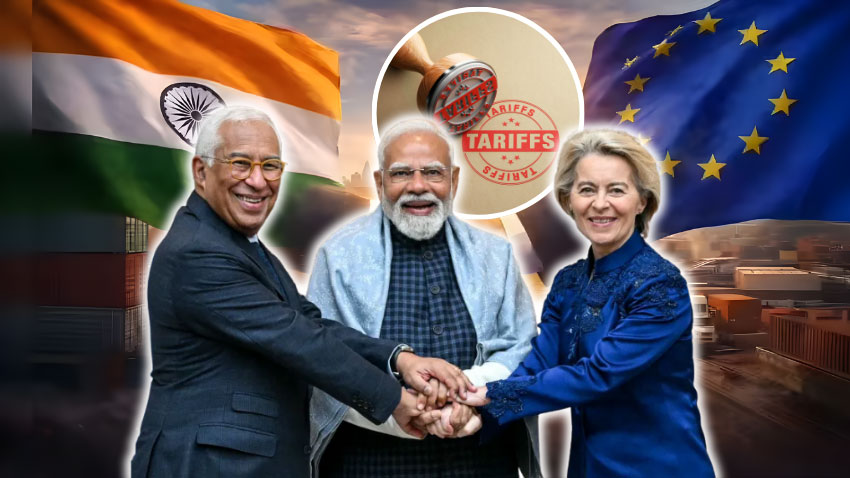
India and the European Union announced what leaders called the “mother of all deals”, ending nearly two decades of tough trade negotiations. The agreement aims to create one of the world’s largest free trade zones.
EU leaders and Prime Minister Narendra Modi said the pact will help both sides face growing economic pressure from the United States and China. The deal is expected to deepen cooperation and reduce trade barriers on a historic scale.
Under the agreement, tariffs will be cut or removed on almost 97% of European exports to India. The EU said this alone could save up to $4.75 billion every year in duties for European companies.
Also Read: Pakistan to resolve $799 million PTCL privatization dispute
“This deal will bring many opportunities for India’s 1.4 billion people and millions across the EU,” Modi said. He added that the agreement covers nearly 25% of global GDP and about one-third of world trade.
European Commission President Ursula von der Leyen said Europe and India are “making history”. She said the pact creates a free trade zone of two billion people, with benefits flowing to both sides.
EU officials described it as the most ambitious trade agreement India has ever signed. European firms are expected to gain a strong early advantage, especially in agriculture, automobiles, and services.
Trade between the EU and India has grown rapidly. Goods trade reached $139 billion in 2024, up nearly 90% over the past decade, while services trade stood at $69 billion.
India has agreed to ease access for key European products. Car tariffs will be cut gradually from as high as 110% to as low as 10%. Duties on wines will fall from 150% to around 20%, while tariffs on processed foods such as pasta and chocolate will be removed.
Also Read: Electric vehicle prices to rise as lithium costs jump in Pakistan
European firms will also gain better access to India’s financial services and maritime transport sectors. In return, India expects gains in textiles, gems and jewellery, leather goods, and services.
The final talks stretched into the last hours, with difficult issues such as the EU’s carbon border tax on steel. The deal comes as both sides look for new markets amid US tariffs and tighter Chinese trade controls.