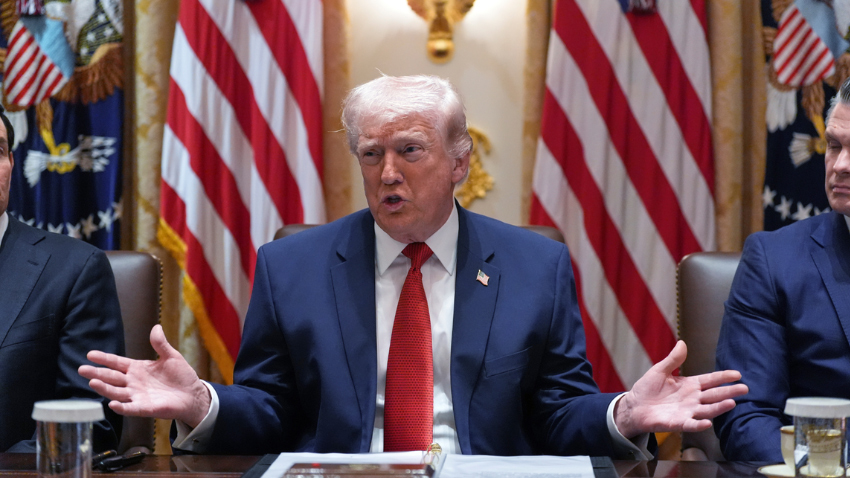
Former US President Donald Trump has delivered a blunt warning to allied nations, stating that the United States will no longer guarantee their defense and urging them to “learn to fight” independently.
In a series of remarks on social media and in interviews, Trump criticized traditional allies including the United Kingdom, France, and other European nations for failing to support the US during its ongoing conflict with Iran.
Strait of Hormuz Crisis Drives Global Tensions
At the center of the crisis is the strategically vital Strait of Hormuz, a key maritime route for global oil shipments. The disruption of tanker traffic has driven energy prices higher, with US fuel costs reportedly crossing $4 per gallon.
Trump urged countries dependent on the route to either buy fuel from the US or secure it themselves, stating: “Go get your own oil.” He emphasized that nations benefiting from the waterway must now step up to ensure its security.
Allies Reluctant to Join US Efforts
Several US allies have reportedly resisted deeper involvement in the conflict. Countries such as Spain and Italy restricted the use of their airspace and bases for US military operations, while France imposed conditions on military transit.
This reluctance has fueled frustration within Washington, with US Defense Secretary Pete Hegseth stating that the burden of securing global trade routes should not fall solely on the United States.
Also Read: Iran strikes claim: US radar, anti-drone systems destroyed as tensions rise
US-Iran Conflict and Military Claims
Trump claimed that US strikes have significantly weakened Iran’s military and nuclear capabilities, asserting that Tehran may take up to a decade to recover. He reiterated that preventing Iran from acquiring nuclear weapons remains a core US objective.
Meanwhile, US military officials revealed that over 11,000 strikes have been conducted, with B-52 bombers now flying missions following air superiority over Iran.
However, conflicting narratives persist, as Iranian officials deny progress in diplomatic talks and continue to assert resilience.
NATO Warning and Shifting Global Alliances
Trump also warned that failure by NATO members to contribute meaningfully to global security—particularly in the Strait of Hormuz—could threaten the alliance’s future.
The evolving crisis has also prompted closer coordination between the US, Israel, and several Gulf nations, signaling a potential shift in regional alliances.
Global Implications and Uncertain Endgame
Analysts warn that allowing Iran to maintain control over the Strait of Hormuz could be viewed as a strategic setback for the US, potentially reshaping global energy markets and regional power dynamics.
At the same time, escalating military action risks prolonging the conflict and increasing casualties, placing additional pressure on US leadership to find a balanced resolution.