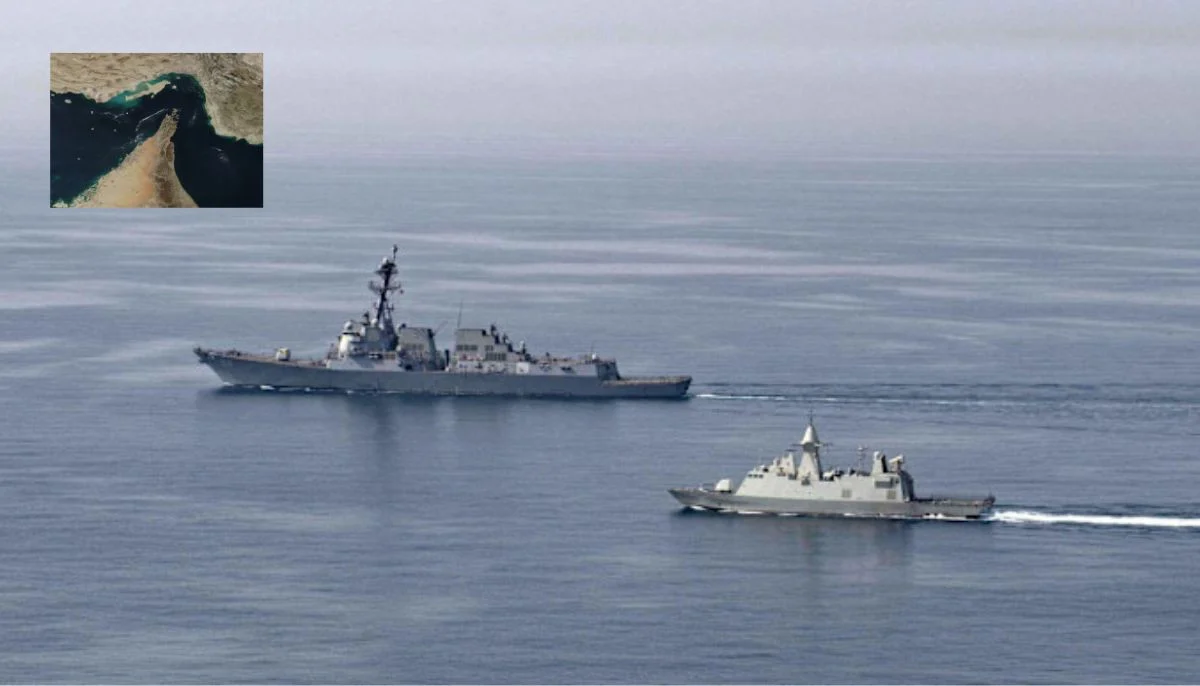
Iran has issued a sharp diplomatic warning to the United States, stating that the Strait of Hormuz, one of the world’s most strategic oil transit routes, will reopen only under new Iranian maritime regulations and will not be accessible to the US under Donald Trump’s influence.
The remarks were made by Ibrahim Azizi, head of Iran’s Parliamentary National Security and Foreign Policy Commission, who responded strongly to recent US political rhetoric regarding regime change and regional control. He stated that if there is any shift in the maritime order of the region, then “Trump’s dream of regime change has already been fulfilled in a different form.”
Also Read: Trump warns allies US will not defend them as Strait of Hormuz crisis deepens
Azizi further warned in a social media message that the Strait of Hormuz will “certainly reopen, but not for you,” referring to the United States. He added that access to the vital waterway would only be granted to those who comply with Iran’s newly established maritime laws and regulations.
He also declared that “47 years of hospitality are over forever,” signaling a hardening stance in Tehran’s foreign policy approach toward the United States and its allies.
Trump has finally achieved his dream of 'regime change'—but in the region's maritime regime!
— ابراهیم عزیزی (@Ebrahimazizi33) March 31, 2026
The Strait of Hormuz will certainly reopen, but not for you; it will be open for those who comply with the new laws of Iran.
The 47 years of hospitality are over forever.
According to Iranian state-linked reports, the National Security Committee has already approved a plan to impose transit tolls on vessels passing through the Strait of Hormuz. The proposal, reported earlier by the semi-official Fars News Agency, marks a significant shift in Iran’s control over one of the most critical global energy chokepoints.
The Strait of Hormuz remains a vital shipping corridor through which nearly a fifth of the world’s oil supply passes, making any policy shift in the region a matter of global economic concern. Analysts warn that rising tensions over maritime access could further impact global oil prices and geopolitical stability in the Middle East.