Strait of Hormuz tensions rise after Iran’s Revolutionary Guards renew closure threat amid US warnings over Tehran’s nuclear programme.
The Strait of Hormuz, a narrow waterway between Iran and Oman, has once again moved into global focus. A senior commander of Iran’s Revolutionary Guards recently warned that Tehran could close the strait if attacked, as US President Donald Trump signalled possible military action if Iran fails to curb its nuclear ambitions.
Despite repeated warnings over the years, Iran has never fully blocked the strait. However, it has briefly restricted movement during military drills, citing “safety” reasons.
The waterway is one of the world’s most critical oil chokepoints. According to the US Energy Information Administration, nearly 20 million barrels of oil per day passed through the strait in 2024 — about one fifth of global consumption. Around one fifth of global liquefied natural gas trade, mainly from Qatar, also moved through this route.
Also Read: Iran strikes back after US-Israel attack
More than 80 percent of shipments head to Asian markets, with China buying over 90 percent of Iran’s oil exports, according to Kpler. While Saudi Arabia and the UAE have limited alternative pipelines, their combined capacity of about 2.6 million barrels per day cannot fully replace the strait.
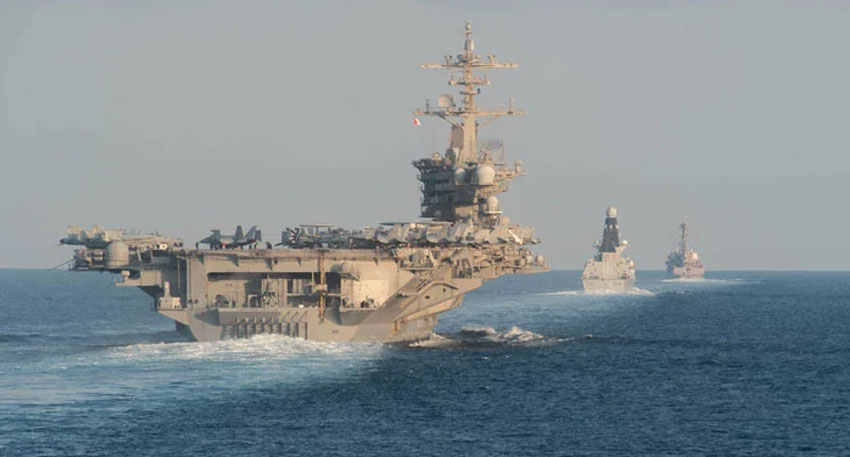
The region has a long history of maritime clashes, including the 1980s “Tanker War” and more recent ship seizures. Western navies, including the US Fifth Fleet in Bahrain, maintain a strong presence.