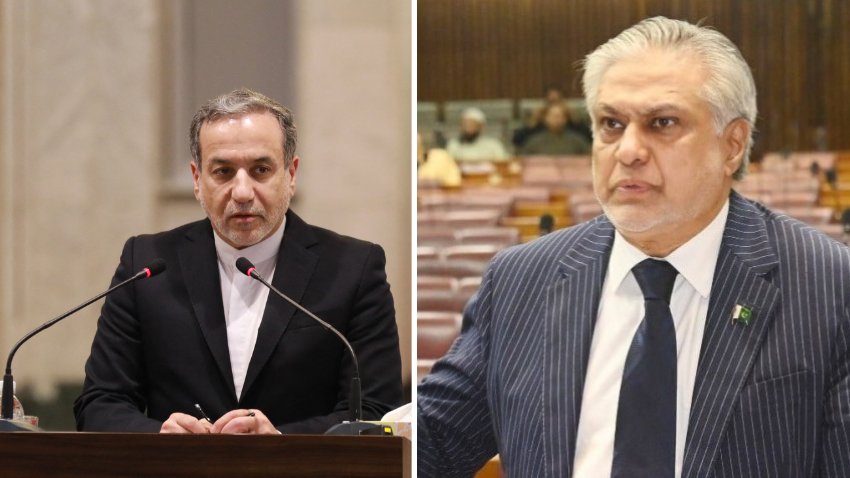
Deputy Prime Minister and Foreign Minister Ishaq Dar spoke with Iranian Foreign Minister Seyyed Abbas Araghchi in a telephone call and expressed serious concern over the fast-changing security situation in the region. He stressed that constant communication between the two countries was important at a time when tensions are increasing. According to the Foreign Office, both leaders agreed to stay in close contact and continue consultations over the unfolding developments.
Diplomatic sources revealed that Pakistan also conveyed its concerns to Tehran, advising Iranian leaders to avoid launching attacks on Gulf countries. Islamabad warned that such actions could dangerously expand the conflict and create instability in an already tense region. This was the second phone conversation between Dar and Araghchi since the conflict involving Iran and the US-Israel alliance escalated last week.
Earlier, Dar said he reminded his Iranian counterpart of Pakistan’s mutual defence pact with Saudi Arabia. He also claimed that Pakistan’s shuttle diplomacy helped prevent Iran from attacking Saudi Arabia during the ongoing crisis.
Pakistan’s diplomatic activity comes as reports have emerged of attacks targeting several countries in the region, including Azerbaijan and Türkiye. These incidents have raised new concerns about growing tensions not only in the Middle East but also in the Caucasus region. Meanwhile, Prime Minister Shehbaz Sharif spoke with Azerbaijan’s President Ilham Aliyev and strongly condemned the reported drone strikes on the Nakhchivan exclave that allegedly targeted civilians.
Must Read: Dubai emergency alert issued over possible missile threat
The prime minister assured Azerbaijan that Pakistan stood in “complete solidarity and support with the brotherly people of Azerbaijan” during this difficult time. He also briefed President Aliyev on Pakistan’s diplomatic efforts following the unfolding crisis in Iran and the Gulf region.
President Aliyev thanked the Pakistani prime minister for the call and appreciated Pakistan’s expression of support. Both leaders stressed the importance of de-escalation and restoring peace in the region and agreed to remain in close contact.
In a separate statement, the Foreign Office expressed “serious concern” over attacks targeting Türkiye and Azerbaijan. It warned that such actions violate international law and could push the region toward further escalation. “While reaffirming Pakistan’s strong solidarity with Türkiye and Azerbaijan, we call for restraint and the use of dialogue and diplomacy to maintain regional peace and stability,” the statement said.
Iran, however, denied accusations that it carried out attacks on Azerbaijan and Türkiye. Iranian officials described the allegations as a “false flag operation” by Israel aimed at expanding the conflict and involving more countries in the confrontation.
Diplomatic observers say Pakistan is trying to maintain a careful balance by keeping good relations with several regional players while also working to prevent the crisis from turning into a wider regional war.