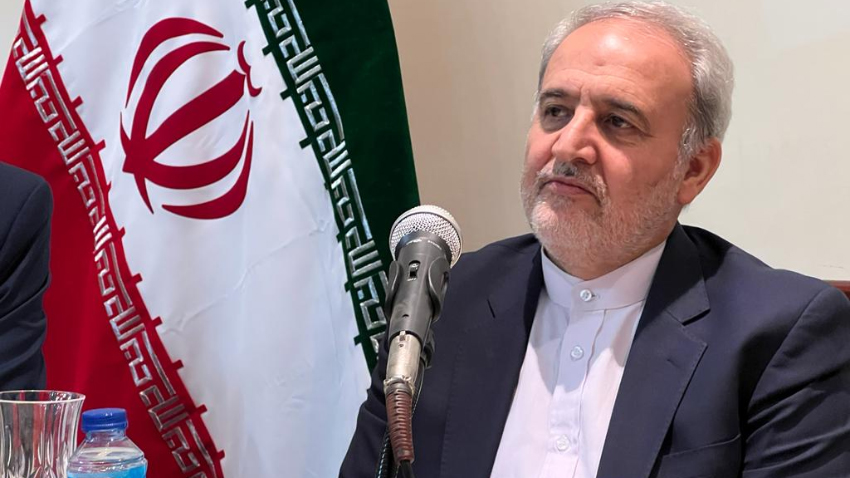
Iran’s ambassador to Pakistan, Reza Amiri Moghadam, has firmly denied that any direct or indirect talks have taken place between Tehran and Washington. His statement comes after US President Donald Trump suggested that diplomatic progress was being made to end the ongoing conflict.
The envoy said Iran has not engaged in any negotiations so far and rejected media reports suggesting otherwise.
He added that if any friendly country is trying to engage both sides, it is only to stop what Iran calls “illegitimate aggression.”
Iran’s military also dismissed Washington’s claims of diplomacy.
Military spokesperson Ebrahim Zolfaqari said the United States is effectively “negotiating with itself,” according to state media reports. He warned that regional stability depends on Iran’s military position and said pre-war economic conditions would not return unless the US changes its approach.
Meanwhile, fighting across the region has intensified sharply. Iran launched a new wave of missile and drone attacks targeting Israel as well as areas hosting US forces in Kuwait, Jordan, and Bahrain. Air raid sirens were heard in central Israel, while missile trails were seen over coastal cities.
In Kuwait, a drone strike caused a fire at an airport fuel tank, while Jordan reported falling debris near Amman. Bahrain also activated emergency air defense systems amid growing threats.
Must Read: US expected to send thousands more troops to Middle East: sources
The conflict, which began on February 28 after US and Israeli strikes on Iran, has now spread across multiple countries. It has disrupted global energy supply routes and caused instability in aviation and trade networks.
In Lebanon, Israeli operations against Hezbollah have intensified, causing widespread destruction and displacement. Reports say more than 1,000 people have been killed and over a million forced to leave their homes. At the same time, US President Donald Trump claimed that Washington is still engaged in negotiations with Iran.
He described talks as ongoing and referred to a “very big present” linked to the Strait of Hormuz, though he gave no further details. Iran has not confirmed any such discussions. Media reports suggest possible backchannel diplomacy involving intermediaries, but nothing has been officially verified. Meanwhile, the Strait of Hormuz remains a major global concern due to its importance in oil transport.
Iran has warned that it may restrict access for countries it considers hostile, while allowing safe passage for non-hostile vessels. The ongoing instability has already affected global oil prices and forced airlines to change routes. Economists warn that continued disruption could also impact global food production through rising fertilizer costs.