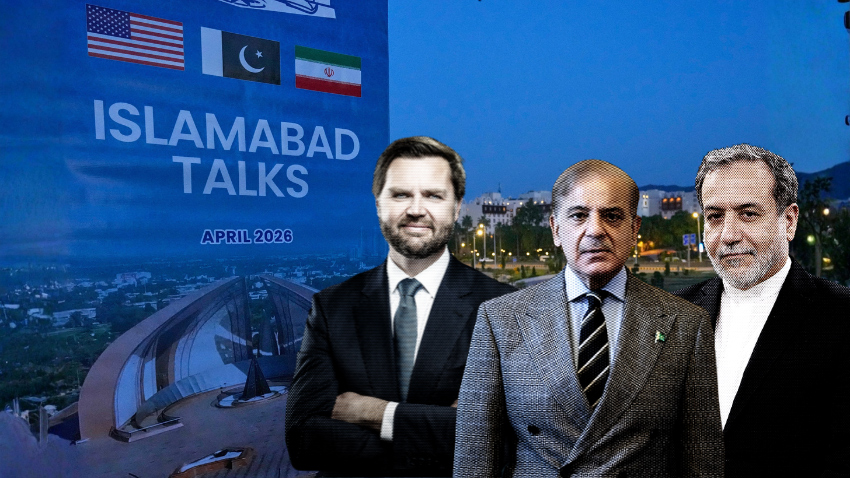
Intense diplomatic negotiations between the United States and Iran in Islamabad came very close to producing a breakthrough before collapsing at the final moment. Instead, US Vice President JD Vance later addressed reporters and confirmed that the negotiations had failed to produce a final agreement.
Sources involved in the diplomatic process revealed that a draft agreement had already been prepared and was nearly ready to be signed. Iranian Foreign Minister Abbas Araghchi also confirmed that both sides had been very close to signing what he called the “Islamabad MoU.” However, he claimed that the United States introduced new demands at the last moment, which caused the negotiations to break down.
According to US officials, Washington wanted Iran to completely end uranium enrichment and give up all existing nuclear stockpiles. The United States also believed Iran had violated the ceasefire agreement by not reopening the Strait of Hormuz immediately.
Also Read: Pakistan will continue efforts to resolve the US-Iran conflict, says PM Shehbaz
Iran, on the other hand, asked for strong guarantees before making such major concessions. Iranian negotiators were also cautious because they feared that the US might change its position after Tehran agreed to major demands.
Diplomatic sources also said communication difficulties played a role in the delay. Iranian officials had limited contact with their leadership back home due to security concerns, while the US delegation had direct and frequent communication with President Donald Trump during the negotiations.
Vice President JD Vance confirmed that he spoke with Trump almost a dozen times during the talks. This constant communication reflected how serious and sensitive the discussions had become.
Although the talks ended without a formal agreement, diplomats say the discussions still created a foundation for future negotiations. Iranian officials described the meetings as the most serious engagement between the two countries since the 1979 Islamic Revolution.
Pakistan played a central role in arranging the talks, bringing both sides to the table after decades of hostility. Diplomatic sources said Pakistani officials worked for weeks to prepare the groundwork, manage security, and facilitate discussions.
Following the stalled talks, Pakistan has continued its diplomatic efforts to keep the ceasefire intact and encourage further negotiations. Deputy Prime Minister and Foreign Minister Ishaq Dar has already contacted several regional countries, including Saudi Arabia, Egypt and Turkey, to support peace efforts.
Also Read: US-Iran talks: Multiple rounds of constructive dialogue held, says Ishaq Dar
Diplomats say senior officials from these countries are expected to visit Islamabad soon as part of ongoing efforts to prevent a return to conflict in the region. China has also supported the diplomatic process and urged all parties to continue negotiations.
Despite the failure to sign the agreement, many observers believe diplomacy still has a chance. Analysts say recent US threats of a naval blockade around the Strait of Hormuz could be a pressure tactic aimed at pushing Iran back to the negotiating table.
For now, the fragile ceasefire between the sides is holding, and diplomats hope further talks may soon restart to prevent another escalation in the region.