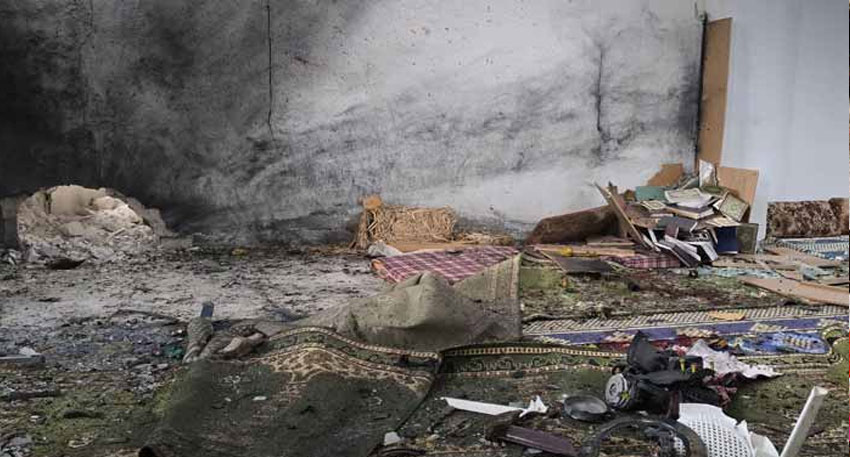
The blast hit the mosque located on Al-Khadri Street in the Wadi al-Dahab neighbourhood, an area largely populated by Syria’s Alawite community. Authorities confirmed that the explosion happened while worshippers were inside, turning a routine prayer into a scene of devastation.
In a statement, the interior ministry said, “A terrorist explosion targeted the Ali Bin Abi Talib Mosque during Friday prayers in Al-Khadri Street in the Wadi al-Dahab neighbourhood of Homs,” adding that six people were killed and 21 others wounded.
Syria’s state news agency Sana reported that investigations were underway to determine the exact cause of the blast. It shared images from inside the mosque showing a large hole in one wall, scattered carpets and damaged religious books, while thick black smoke filled part of the building.
The Britain-based Syrian Observatory for Human Rights said it was not immediately clear whether the explosion “was caused by a suicide attack or an explosive device”. A local security source later told AFP that it may have been caused by “an explosive device placed inside the mosque”.
Read more: Seven killed, 35 injured in Nigeria Mosque Bombing
A resident of the area, speaking anonymously, described scenes of fear and confusion. He said people “heard a loud explosion, followed by chaos and panic in the neighbourhood”. “No one dares to leave their house, and we are hearing ambulance sirens,” he added.
Homs has a painful history of sectarian violence during Syria’s long civil war. Since Assad’s ouster in 2024, residents and monitoring groups have reported kidnappings and killings targeting minority communities.
Earlier this year, Syria’s coastal regions witnessed mass killings of Alawite civilians. Authorities accused armed Assad loyalists of triggering the violence by attacking security forces. A national inquiry said at least 1,426 people were killed, while rights groups estimated the toll at more than 1,700.
The mosque blast highlights how fragile security remains in Syria even after major political changes. Minority communities appear especially vulnerable. Until investigations conclude, fear and uncertainty are likely to deepen among residents of Homs.