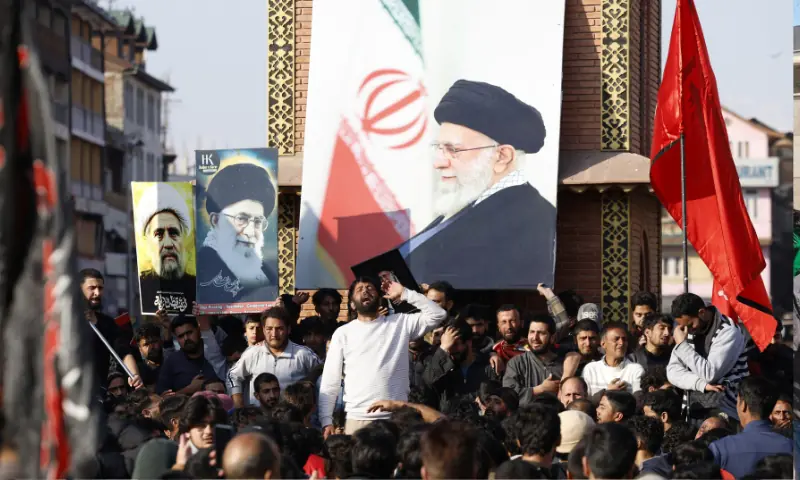
Following the confirmed martyrdom of Ali Khamenei in reported US-Israel strikes, Iran has entered one of the most sensitive political transition periods in its modern history, raising the question: who will become the next Supreme Leader of Iran?
Iran Prepares for Leadership Transition After Supreme Leader’s Death
Khamenei led the Islamic Republic for nearly four decades but did not formally announce a successor before his death.
Under Iran’s constitution, the authority to appoint the next Supreme Leader lies with the 88-member Assembly of Experts, an elected body of senior Shia clerics responsible for selecting the country’s top religious and political authority.
The selection process is traditionally conducted behind closed doors, making predictions difficult and politically sensitive.
This leadership transition is only the second in the history of the Islamic Republic. The first occurred in 1989 after the death of revolutionary founder Ruhollah Khomeini, when Khamenei himself was chosen as Supreme Leader.
Temporary Leadership Council Assumes Authority
Following the Supreme Leader’s death, an interim leadership council is formed according to Article 111 of the Iranian Constitution.
The temporary council includes:
- President of Iran – currently Masoud Pezeshkian
- Chief of Judiciary – Gholam-Hossein Mohseni-Ejei
- A Guardian Council jurist selected by the Expediency Discernment Council
This body manages state affairs until the Assembly of Experts appoints a permanent Supreme Leader.
Also Read: Iran Supreme Leader Ayatollah Ali Khamenei martyred in US-Israel strikes
Potential Candidates for Supreme Leadership
Political analysts and Iranian state sources have speculated about several possible successors reportedly considered in confidential discussions.
1. Mojtaba Khamenei
- Son of the late Supreme Leader
- Strong ties with the Islamic Revolutionary Guard Corps (IRGC)
- Has never held formal public office but is widely discussed in succession speculation
2. Alireza Arafi
- Head of Iran’s religious seminaries
- Influential clerical figure in Shia academic institutions
3. Mohammad Mahdi Mirbagheri
- Considered an ultra-conservative religious scholar
- Supports maintaining revolutionary ideological stability
4. Hassan Khomeini
- Grandson of revolutionary founder Khomeini
- Viewed by some as a reformist-oriented candidate
5. Gholam-Hossein Mohseni-Ejei
- Current Chief Justice since 2021
- Considered an institutional stability candidate
IRGC Announces Major Military Response Plans
Amid leadership uncertainty, reports suggest that the Islamic Revolutionary Guard Corps (IRGC) has planned what some officials describe as the “most devastating offensive operation” in Islamic Republic history.
The operation is expected to target Israeli-controlled territories and US military installations across the region, reflecting Iran’s vow of retaliation after the loss of its top leader.
Constitutional Succession Mechanism in Iran
According to Iranian constitutional law, the Assembly of Experts must convene immediately after the Supreme Leader’s death.
The body will:
- Review qualified clerical candidates
- Conduct internal deliberations
- Elect the next Supreme Leader through majority consensus
Candidates must pass ideological, religious, and political vetting by the Guardian Council before eligibility.
Political Future of Iran Remains Uncertain
Experts believe the next few weeks will be decisive for Iran’s political stability and regional strategy.
The succession process may influence:
- Middle East security balance
- Nuclear negotiation dynamics
- Iran-US relations
- Gulf regional military posture
The potential leadership transition is considered one of the most significant geopolitical developments in decades.
Global Community Watches Iran’s Transition
International governments and diplomatic organizations have urged restraint amid fears that leadership uncertainty could intensify regional tensions.
The United Nations and several world powers have called for dialogue and de-escalation.