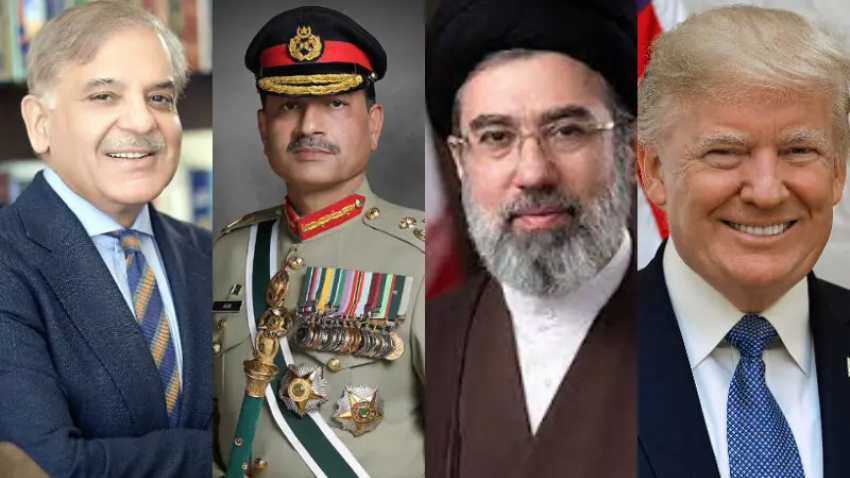
The ceasefire comes after weeks of intense conflict that had raised serious concerns about regional stability and global energy supplies.
Officials say the agreement has created a small but important opportunity for dialogue and future peace talks between the two sides.
Pakistan played a key role as a mediator by maintaining contact with both Washington and Tehran and encouraging them to move toward a ceasefire.
Several countries openly praised Pakistan’s efforts in helping reduce tensions.
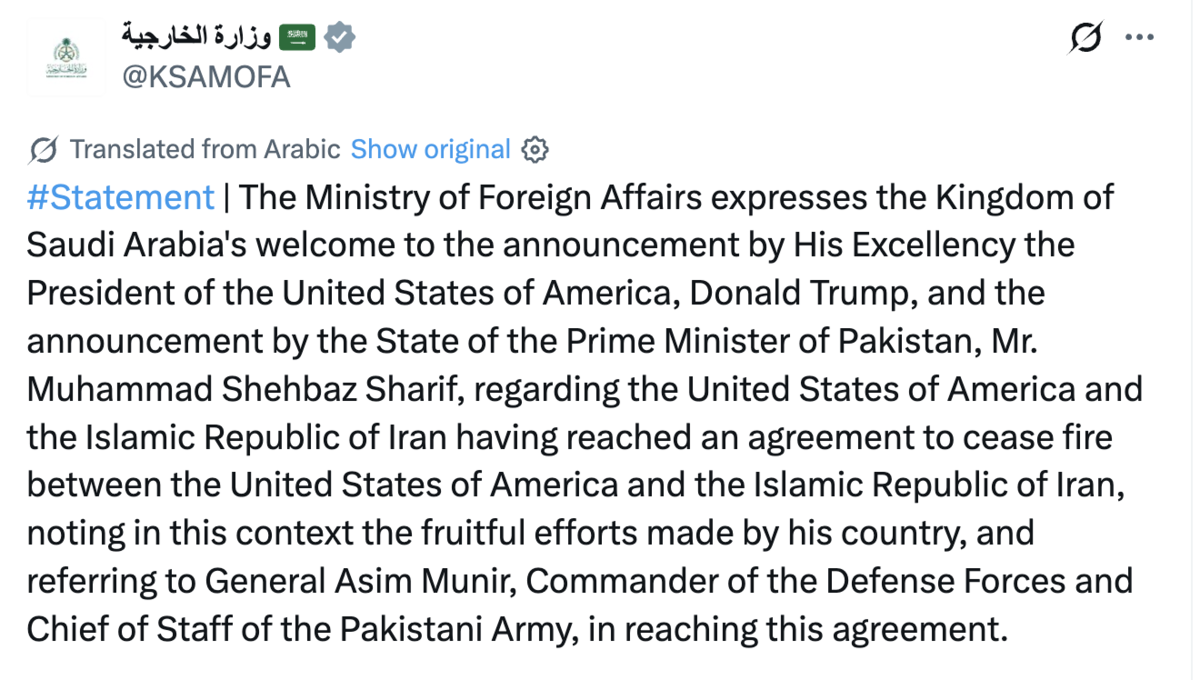
Saudi Arabia acknowledged Islamabad’s “fruitful efforts” in facilitating the agreement and welcomed the ceasefire as a positive step.
Oman also supported the development, calling it an “initial step toward de-escalation” and stressing the importance of protecting global trade routes and maritime security.
Leaders from other regions also appreciated Pakistan’s diplomatic engagement.
Malaysian Prime Minister Anwar Ibrahim praised Pakistan’s “tireless and courageous diplomacy” and highlighted its willingness to engage with all sides.
European leaders also recognized Pakistan’s contribution.
António Costa thanked Pakistan for helping make the agreement possible and urged all parties to maintain the ceasefire for long-term peace.
Kaja Kallas described the deal as “a step back from the brink” and confirmed that she personally thanked Pakistan’s foreign minister for the effort.
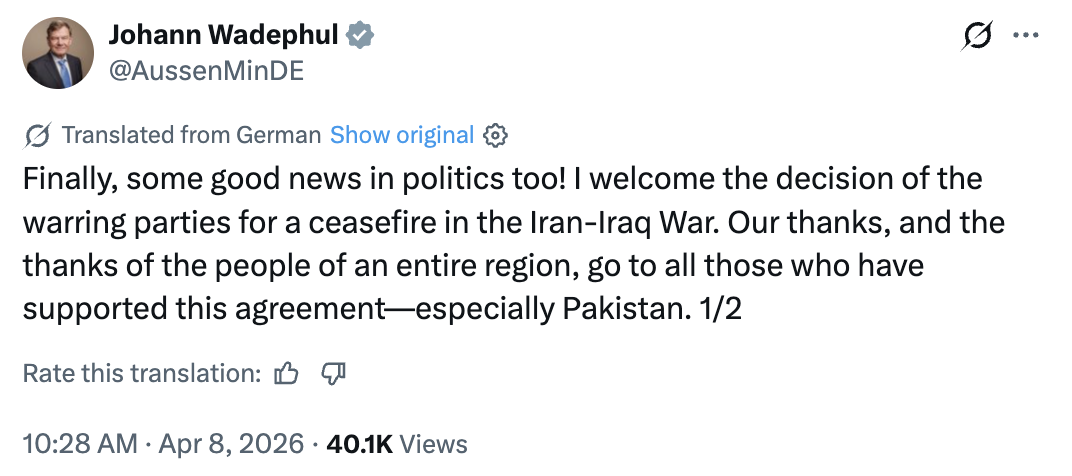
Germany’s foreign minister Johann Wadephul also appreciated Pakistan’s role, saying it was an important step toward stability in the region.
The United Nations welcomed the ceasefire and expressed “sincere appreciation” for Pakistan and other countries involved in mediation efforts.
Diplomatic representatives in Islamabad also shared similar views.
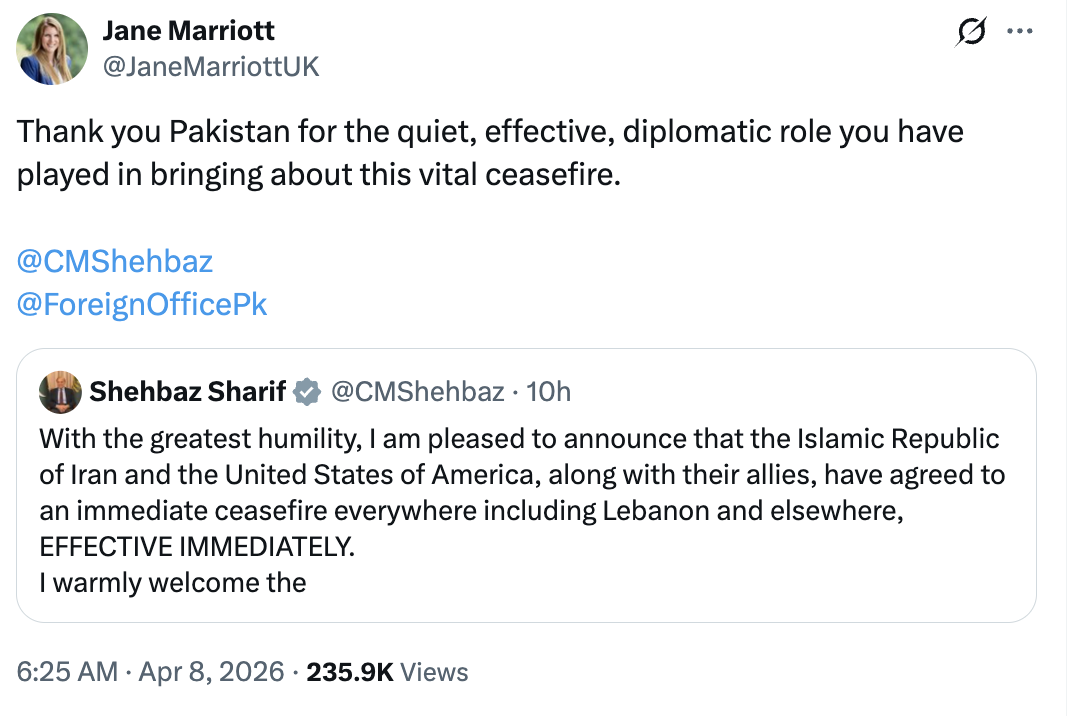
British High Commissioner Jane Marriott praised Pakistan’s “quiet, effective” diplomacy, while Australia’s envoy Timothy Kane congratulated the country for its role in promoting peace.
India also welcomed the ceasefire and stressed the importance of continued dialogue, de-escalation and maintaining global trade through the Strait of Hormuz.
Experts say the agreement has increased hopes for broader negotiations involving regional players.