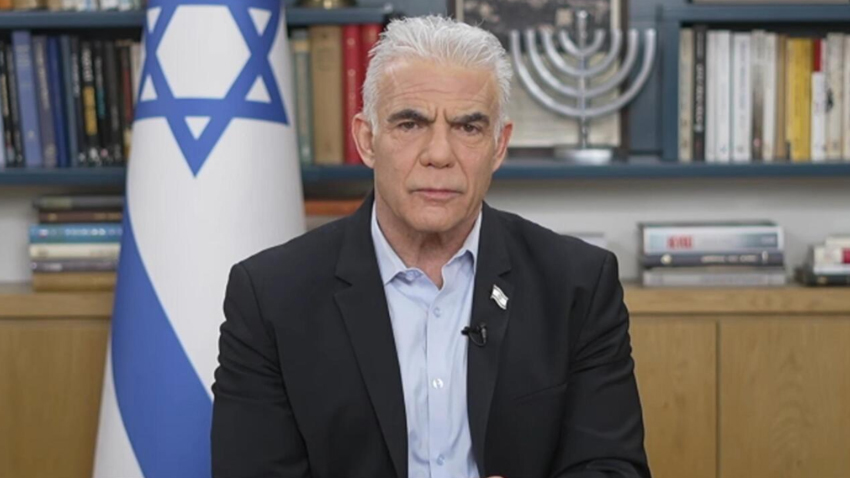
Yair Lapid strongly criticized the ceasefire agreement with Iran, saying it reflects poor political and strategic decisions by the government. He accused Prime Minister Benjamin Netanyahu of failing to meet the objectives of the conflict.
Lapid said that Israel was not properly involved in key decisions related to national security. He claimed that while the military performed well and the public showed resilience, the political leadership fell short.
He added that the situation represents a major setback, saying it could take years to repair the political and strategic damage caused by what he described as poor planning and decision-making.
Netanyahu had set major goals during the conflict, including reducing Iran’s nuclear capabilities, limiting its missile strength, and weakening its regional influence. These aims were presented as necessary to address what Israel sees as a serious threat.
Must Read: US journalist Kittleson released by Iraqi armed group, Rubio says
Lapid argued that none of these goals were fully achieved. He said the leadership failed to deliver results despite clear objectives set at the beginning of the war.
The ceasefire was agreed between the United States and Iran after negotiations aimed at preventing further escalation. The agreement came at the last moment to avoid a wider and more destructive conflict.
Israel expressed support for the US decision to pause military actions but clarified that the ceasefire does not include Lebanon. Tensions in that region remain due to ongoing clashes with Hezbollah. Israel has conflicted with Iran-backed Hezbollah since rocket fire began earlier this year, adding another layer of instability to an already tense regional situation.