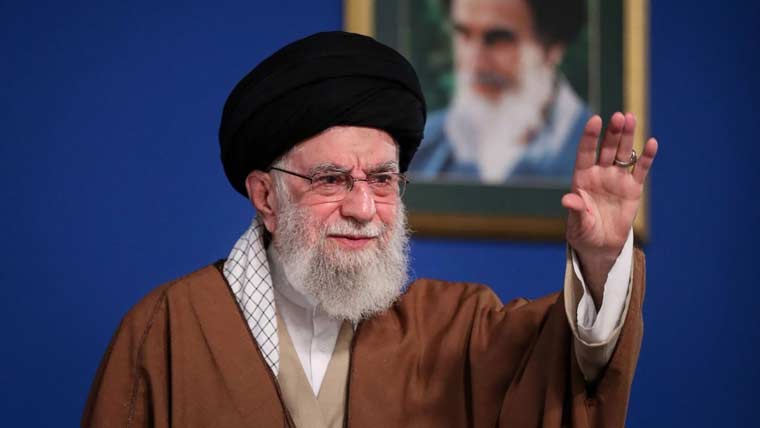
Iran has declared 40 days of national mourning and seven days of public holidays following confirmation of Supreme Leader Ali Khamenei’s martyrdom in reported US-Israel airstrikes, marking a dramatic escalation in the Middle East conflict.
40 Days of Mourning Announced After Khamenei’s Death
Ali Khamenei was confirmed killed early Sunday by Iran’s state broadcaster, hours after US and Israeli officials claimed he had died in coordinated airstrikes.
Shortly after the announcement, the Iranian cabinet declared seven days of official public holidays and 40 days of national mourning, according to state media and the Fars news agency. Authorities have not released detailed information about the exact circumstances of his killing.
The death of the 86-year-old leader, who had ruled Iran since 1989, represents one of the most consequential developments in Iran’s modern political history.
Senior Iranian Officials Killed in Strikes
Iranian and international reports indicate that several senior officials were killed during Saturday’s attacks, including:
- Ali Shamkhani
- Multiple commanders of the Islamic Revolutionary Guard Corps (IRGC)
Explosions were reported across Tehran, Tabriz, Qom, Karaj, Khorramabad, Kermanshah, Ilam, and other cities. Iran’s Supreme Leader’s office in Tehran was reportedly among the targeted sites. Iranian authorities temporarily closed national airspace for six hours following the strikes.
The Pentagon reportedly named the US mission “Operation Epic Fury,” while Israel referred to its campaign as “Lion’s Roar,” mobilizing thousands of reservists.
Also Read: Iran Supreme Leader Ayatollah Ali Khamenei martyred in US-Israel strikes
Iran Retaliates With Missile Strikes
In response, Iran launched missile attacks toward Israel and across Persian Gulf states. Bahrain, the UAE, Kuwait, and Qatar reported intercepting incoming missiles, while one fatality was reported in Abu Dhabi.
Iran’s Islamic Revolutionary Guard Corps Navy warned vessels against transiting through the Strait of Hormuz, raising concerns about global oil supply disruptions.
Global Aviation Disrupted After US-Iran Strikes
The escalating conflict severely disrupted international air travel. Major airports across the Middle East suspended operations following US-Israel strikes and Iranian retaliation.
Dubai International Airport—one of the world’s busiest hubs—was temporarily closed after sustaining damage during overnight missile activity. Abu Dhabi and Kuwait airports were also impacted.
Airspace over Iran, Iraq, Kuwait, Israel, and Bahrain remained largely empty as airlines canceled or rerouted flights, triggering widespread global aviation disruption.
Regional War Fears Intensify
With missiles exchanged and national mourning declared, fears are mounting that the US-Israel-Iran confrontation could evolve into a broader regional war. Global leaders have urged restraint and called for diplomatic solutions as tensions continue to rise.
Analysts suggest the conflict could either prolong into a drawn-out confrontation or move toward a negotiated settlement under mounting international pressure. For now, the situation remains volatile and rapidly evolving.