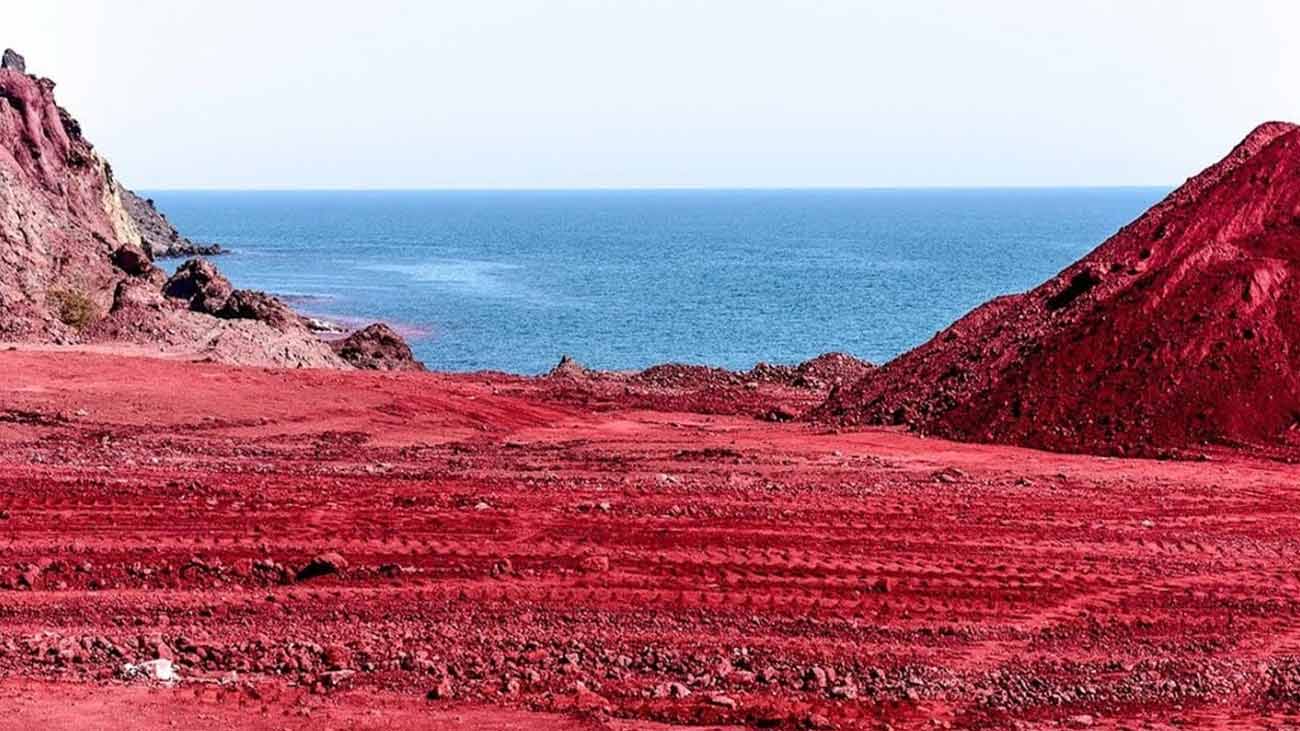
Rainfall turned the beach into a stunning red spectacle because of the island’s unique red soil, rich in iron oxide. When it rains, streams of this red soil, locally called gelak, wash down from the cliffs into the sea, mixing with the water and temporarily turning it deep shades of red.
The contrast between the crimson water and the natural blue of the Persian Gulf creates a striking visual effect that draws tourists, photographers, and social media attention.
As streams of red soil flowed into the sea, turning the water deep shades of crimson, the beach is renowned for its vivid red sand and cliffs, formed by high concentrations of iron oxide.
When rain falls, the red soil, locally called gelak, moves toward the shoreline, creating a striking contrast with the blue waters of the Persian Gulf.
This rare phenomenon draws tourists, photographers, and social media enthusiasts eager to capture the crimson waters. Besides its visual beauty, the red soil is exported in limited amounts and used in cosmetics, pigments, and traditional products.
Read more: Indian connection exposed in Sydney terror attack as Pakistan blame unravels
Hormuz Island lies in the Strait of Hormuz, where the Persian Gulf meets the Gulf of Oman, about 670 miles, 1,080km south of Tehran. Rainfall is uncommon on the island, usually occurring in winter and early spring.
Hormuz Island’s red beach is a reminder of nature’s rare spectacles. While short-lived, these crimson waters highlight the island’s unique geology and boost tourism. Visitors and locals alike value both the beauty and practical uses of its red soil.
Rainfall rarely turns Hormuz Island’s beach red because the island receives very little rain overall. Most of the year, the climate is dry, and rainfall occurs mainly in winter and early spring. Only when enough rain falls does it wash the iron-rich red soil from the cliffs into the sea, creating the crimson spectacle.
The rarity of rainfall, combined with the island’s unique geology—high concentrations of iron oxide in the soil and cliffs—makes this natural event unusual and visually striking. That’s why the red waters appear only occasionally, attracting tourists and photographers whenever it happens.