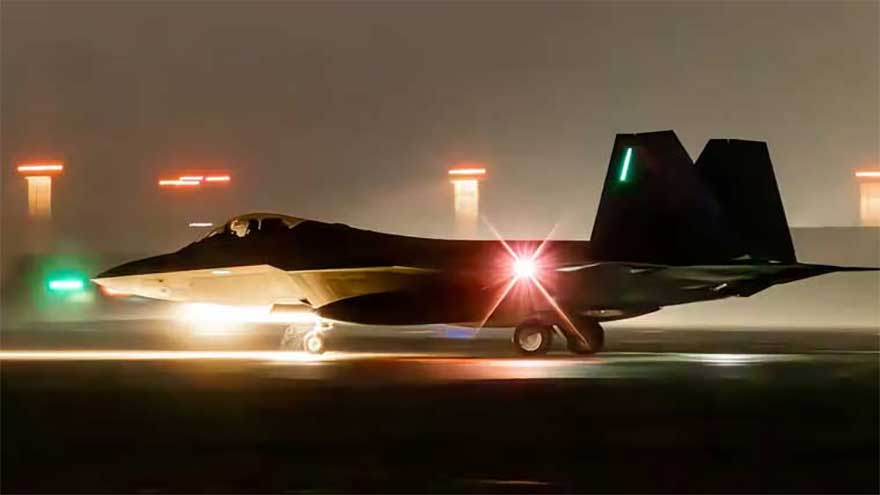
Satellite imagery and publicly available flight tracking data reveal a significant surge in US military planes near Iran, with more than 150 aircraft shifted to bases across Europe and the Middle East following stalled nuclear talks between Washington and Tehran.
According to a review by the The Washington Post, the buildup began after a second round of negotiations between the United States and Iran ended without a breakthrough on February 17. The deployment marks one of the largest concentrations of U.S. military forces in the region in more than two decades — the most substantial presence since before the 2003 Iraq War.
US Military Buildup Near Iran Intensifies
The sharp increase in US military aircraft near Iran comes amid heightened geopolitical tensions and renewed warnings from former President Donald Trump, who threatened military action if a deal to restrict Iran’s nuclear program is not reached.
While Trump has not specified the exact objectives of any potential strike, Iranian officials have indicated that a diplomatic agreement remains possible, though negotiations could take time.
Defense analysts say the scale of the deployment surpasses the military posture observed prior to U.S. strikes targeting Iran’s nuclear program in June last year.
Also Read: Plan B: Trump may push for Iran regime change
USS Gerald R. Ford and Naval Expansion in the Middle East
Dozens of additional aircraft are also stationed aboard the USS Gerald R. Ford, which was recently spotted off the coast of Crete, Greece. The Ford is the second U.S. aircraft carrier deployed to the Middle East, signaling a major escalation in naval presence.
With two carrier strike groups now operating in or near the region, roughly one-third of active U.S. naval ships are currently positioned in the broader Middle East theater.
Experts Warn of Possible Multiday Air Campaign
Security experts reviewing the satellite imagery suggest the military assets assembled point toward preparations for a sustained air campaign rather than a limited, short-term strike.
Dana Stroul, former deputy assistant secretary of defense for the Middle East, stated that the scale of forces allows the U.S. military to execute a range of options — from targeted operations to a prolonged, high-intensity air assault.
Similarly, Mark Cancian, senior adviser at the Center for Strategic and International Studies, noted that if a weekslong campaign is under consideration, even more resources would likely be required.
Pentagon Declines Specifics Amid Operational Security
U.S. defense officials have acknowledged the large-scale movement of military assets into the Middle East but declined to provide detailed operational information, citing security concerns.
The rapid US military buildup near Iran underscores escalating tensions in the region and raises concerns about potential conflict if diplomatic negotiations fail to produce results.
As nuclear talks remain uncertain, satellite imagery continues to track one of the most significant American force deployments in the Middle East in recent years.