

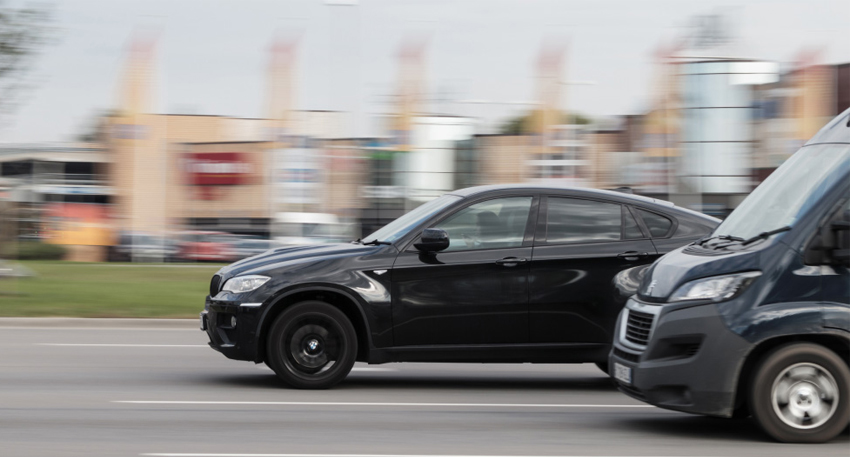
A recent study published in Royal Society Open Science sheds light on a common driving experience where a slower car catches up with a faster one after being overtaken. The research was led by Conor Boland from Dublin City University and uses a mathematical model to explain how traffic signals influence this phenomenon.
The study examines a simple scenario involving two vehicles traveling at different constant speeds. While logic suggests that a faster vehicle should remain ahead, the model demonstrates that traffic lights can disrupt this outcome. Since signal timing is effectively random for drivers, a faster car may encounter a red light soon after overtaking, allowing the slower car to close the gap.
Also Read: Fuel price cut triggers big drop in transport fares
According to the findings, the likelihood of this catch-up depends on factors such as the time advantage gained during overtaking, the total traffic signal cycle, and the proportion of red-light duration. If the lead gained is minimal, the probability of the slower car catching up increases significantly.
The research introduces the concept of the “Voorhees Law of Traffic,” inspired by Jason Voorhees, symbolizing how slower drivers can unexpectedly catch up.
The study also highlights that over longer routes with multiple traffic signals, these catch-up events become more frequent. Researchers believe the findings can help improve traffic flow models and better understand real-world driving patterns.