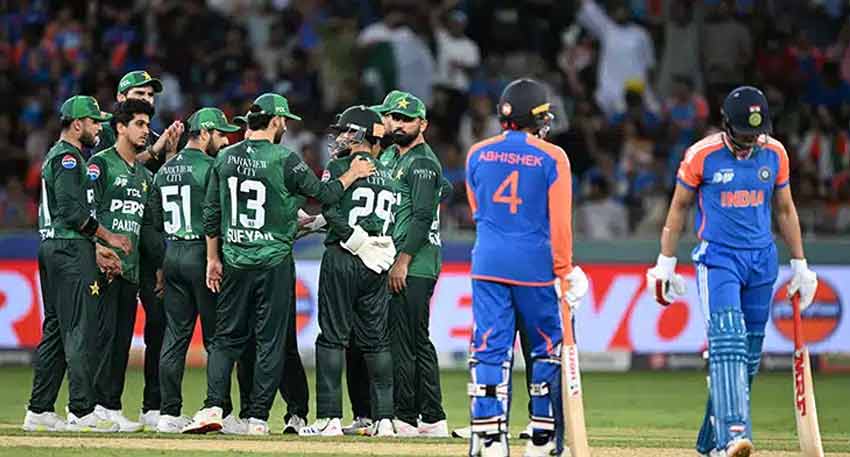
The highly anticipated India Pakistan match, scheduled as part of the T20 World Cup, on 15 February has been cancelled, leaving fans and broadcasters reeling and could have long-term financial and cricketing consequences.
The cancellation comes after Pakistan announced a boycott in protest against the ICC’s controversial move to replace Bangladesh with Scotland.
This decision has drawn sharp criticism from Pakistan, calling it unfair to the Bangladesh Cricket Board and creating tension ahead of the T20 World Cup fixtures.
Read Also: Pakistan to play T20 World Cup but skip India clash in Bangladesh solidarity
Financial analysts estimate that broadcasters could face losses of around PKR141 billion due to the sudden cancellation of the 15 February match.
Sponsorship deals, advertising revenue, and TV rights for the India Pakistan match are expected to take a heavy hit.
The ICC has also issued a warning to Pakistan about potential long-term consequences, including withholding its annual share of $35 million, roughly PKR9,800,000,000.
Fans and analysts are debating the fairness of such measures, questioning how governance affects the T20 World Cup schedule and the integrity of international cricket.
Pakistan’s boycott underscores growing tensions between member boards and the ICC, with the cancelled India Pakistan match becoming the center of global attention.
Read Also: Nipah virus: Will Australia and England skip T20 World Cup 2026 in India?
While the financial losses are staggering, the move highlights deeper issues in cricket politics and scheduling ahead of the T20 World Cup.
The 15 February match cancellation serves as a reminder that cricket decisions are no longer just about the game they’re also about diplomacy, fairness, and the influence of global governing bodies.