

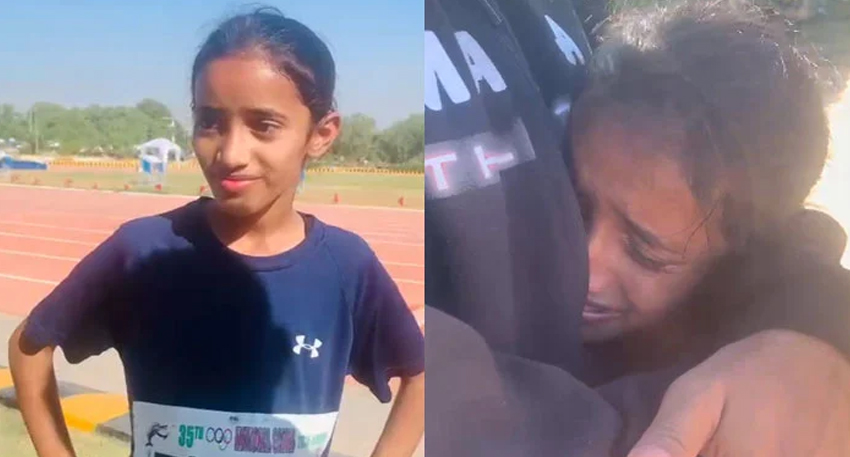
Nine-year-old Kainat Khalil, a rising talent in Pakistani athletics, has drawn national attention after being denied medals for her victories, raising concerns about selective enforcement of age eligibility rules, weak child safeguarding, and inconsistent sports governance.
Kainat recently competed in the BYD Karachi Marathon 2026, completing a 21-kilometre half marathon — a distance typically reserved for adult athletes. Although she recorded one of the fastest times on the course, officials declared her ineligible and awarded her an honorary prize, criticizing her coach for entering a child in a long-distance event.
This incident follows a similar situation at the National Games 2025, where Kainat won a bronze medal in the 10,000-metre race but was barred from competing in the 5,000-metre event. In both cases, authorities only raised objections after she had competed and succeeded, sparking criticism of delayed intervention.
A Rising Star in Pakistan’s Athletics
A third-grade student, Kainat has been running competitively for just over a year. She has already achieved podium finishes in high-profile events, including the Governor House Karachi Marathon, Green Karachi Marathon, Pakistan Day Marathon, Maarka-i-Haq Marathon, and Shuhada Run.
“I want to win a gold medal for Pakistan,” Kainat said, reflecting her ambition and rapid rise. Her performances have captured widespread media attention, but scrutiny followed only once she began outperforming institutional teams.
Also Read: Arshad Nadeem wins gold medal at Islamic Solidarity Games
Selective Rule Enforcement Draws Criticism
According to Kainat’s coach, Abu Bakar, objections emerged only when she defeated major teams like WAPDA, Navy, and Army. “She was cleared during trials, yet barred afterward,” he said. Several athletics officials admitted privately that age-eligibility rules are applied inconsistently, often triggered by performance rather than preemptive safety concerns.
Her father, Khalil Ahmed, believes gender and socioeconomic factors played a role. “We were told to focus on a son instead of a daughter. If a son has rights, does a daughter not?” he said. Analysts note that young female athletes from lower-income backgrounds often lack support, sponsorship, and access to professional guidance.
Health Risks and Administrative Gaps
Sports medicine experts caution against early participation in long-distance events. Dr. Ucksy Mallick explained, “Children under 12 have immature cardiovascular systems, open growth plates, and limited heat regulation. Races like 10,000 metres or half marathons carry serious health risks.”
While safety is a concern, experts emphasise that administrative failure — allowing registration, competition, and post-race disqualification — is the central issue. Psychologists warn that such selective interventions can cause anxiety and confusion in young athletes.
A Call for Reform
Her case highlights systemic issues in Pakistan’s athletics: inconsistent enforcement, lack of child-centered policies, weak medical oversight, and gender and class disparities.
Critics argue: if age rules exist to protect children, why are they enforced only after a child wins? Transparent eligibility checks, consistent enforcement, and robust safeguarding are needed to ensure Pakistan’s young talent is nurtured, not penalized.


