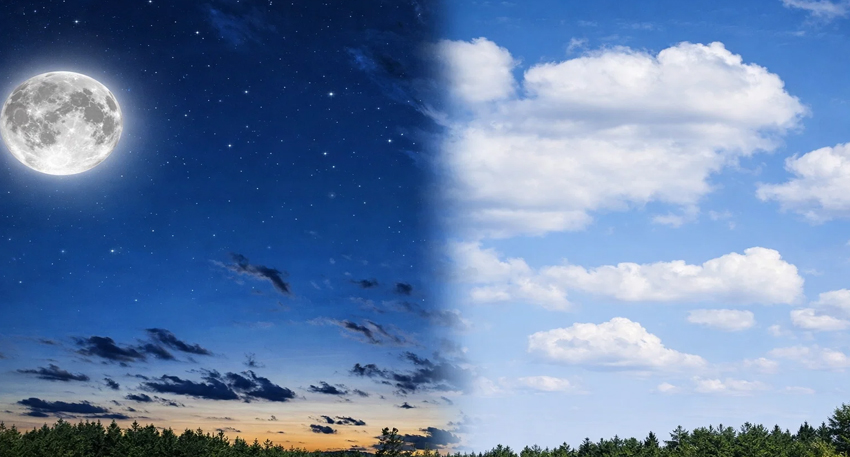
Like many countries in the Northern Hemisphere, Pakistan is witnessing the shortest day and longest night of the year today, as the winter solstice occurs on December 21.
According to astronomical observations, daylight hours across Pakistan are at their minimum, while nighttime lasts the longest compared to any other day of the year. In Lahore and surrounding areas, the day will last around 10 hours and 10 minutes, while the night will extend to nearly 13 hours and 50 minutes. Other cities across the country may experience slight variations of a few minutes.
Experts explain that December 21 marks the shortest day in the Northern Hemisphere, including Pakistan, because the Earth’s axis is tilted at its maximum angle away from the sun. As a result, sunlight reaches this part of the world for the shortest duration.
Also Read: Countdown begins for the longest solar eclipse of the century
The winter solstice is a key astronomical event that signals the official beginning of winter. It occurs when the sun reaches its farthest point south in the sky, positioned directly over the Tropic of Capricorn at about 23.5 degrees south latitude.
Astronomers note that the Earth’s tilted axis is responsible for the changing seasons and varying lengths of days and nights throughout the year. During the winter solstice, the sun appears to “pause” for nearly three days before slowly beginning its northward journey, leading to gradually longer days after today.
Following the solstice, Pakistan will begin to experience incrementally longer daylight hours, although colder weather conditions are expected to persist for several weeks.
The phenomenon is observed twice each year globally, once in December, resulting in the shortest day, and once in June, when the longest day occurs during the summer solstice.