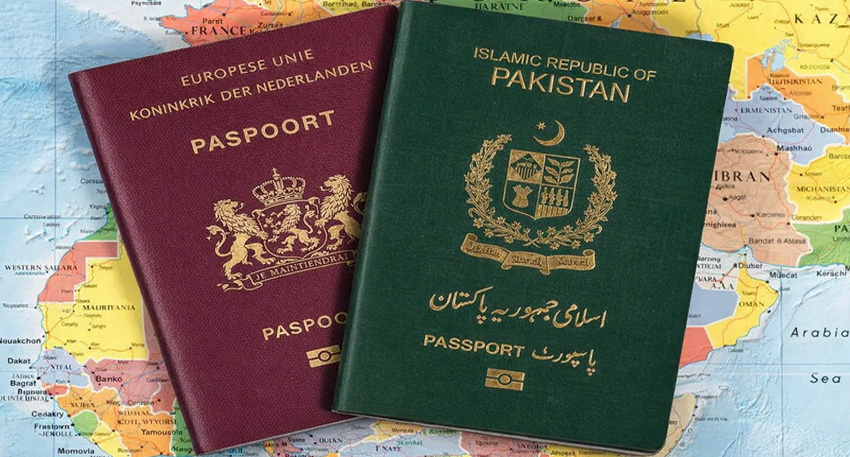
In a landmark policy shift, the Netherlands has abolished the 10-year residency requirement for foreign nationals applying for Dutch citizenship, offering relief to many Pakistanis living and working in the country. The move is expected to benefit skilled professionals, students, entrepreneurs, and long-term residents from Pakistan who were previously deterred by the lengthy waiting period.
Dual Citizenship Remains a Major Hurdle
Despite the relaxed residency rule, dual citizenship in the Netherlands is still not allowed in most cases. This means Pakistani applicants must renounce their Pakistani citizenship to acquire a Dutch passport, a condition that continues to spark concern among overseas Pakistanis with strong family and business ties back home.
The Netherlands remains one of only two EU countries—alongside Austria—that restrict dual nationality for new citizens.
Also Read: New Zealand launches new Golden Visa scheme for Pakistani investors
How This Compares Across Europe
The decision contrasts sharply with recent reforms in other EU states. Germany now permits dual citizenship, allowing immigrants to retain their original nationality. Legal experts argue that the Dutch approach may disadvantage immigrants, including Pakistanis, compared to native-born Dutch citizens who can hold multiple nationalities.
What Pakistani Applicants Should Know
For Pakistanis already meeting other criteria—such as language proficiency, civic integration, and legal residency—the citizenship process is now faster and more accessible. However, applicants must carefully weigh the implications of giving up Pakistani nationality before applying.
Immigration advisers recommend staying updated through official Dutch government channels as further reforms may follow amid growing debate in the EU.