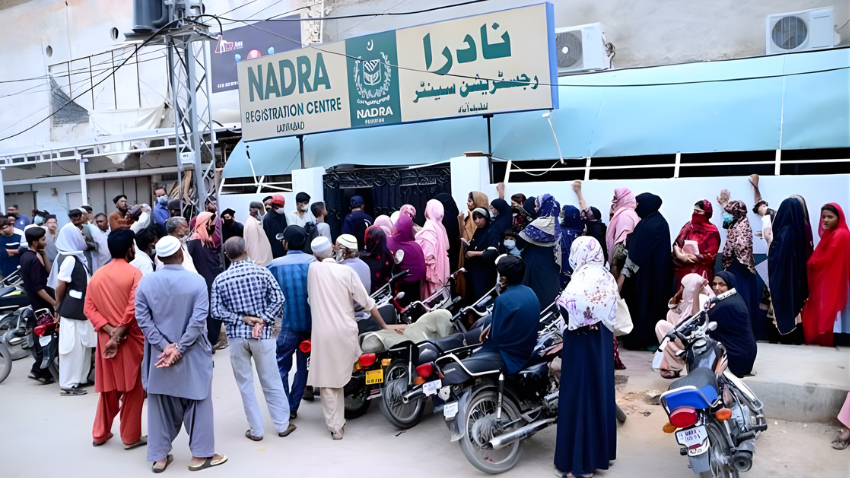
While preparing its Annual Report 2025, the National Database and Registration Authority (NADRA) conducted a detailed analysis of registration data from the past 10 years in collaboration with the Pakistan Bureau of Statistics (PBS), the Election Commission of Pakistan (ECP), the National Commission on the Status of Women (NCSW), and the National Commission for Child Welfare and Development (NCCWD).
The review assessed district-wise and gender-based disparities to determine the causes of the registration gap and recommend corrective measures.
Based on these recommendations, the interior minister approved a structured and legally grounded facilitation mechanism, which was subsequently endorsed by the NADRA Board.
What is the new facility?
Under the new mechanism, effective until December 31, 2026, individuals who do not possess a local government-issued computerized birth certificate may still apply for a CNIC, provided they meet the prescribed verification requirements.
Must Read: How many Pakistanis are registered at NADRA?
The facility is being extended under the provisions of the NADRA Ordinance and relevant CNIC rules, which allow alternative verification procedures in specific cases to enhance registration coverage.
CNICs issued under this scheme will be granted only after identity verification through existing NADRA records and mandatory biometric verification of close family members who are already registered.
Verification requirements explained
Married women (18 years and above): Must provide a verified marriage certificate issued by the local government, the CNIC of either parent, the husband’s CNIC, or biometric verification of one parent and the husband.
Unmarried women (18 years and above): Must provide the CNIC of either parent along with biometric verification of the parent who holds a CNIC.
Men above 24 years of age: At least one parent must possess a CNIC, at least one sibling must be registered, and biometric verification of one parent is mandatory.
Officials say the initiative is expected to bring thousands of previously unregistered citizens — particularly women — into the national database, strengthening their inclusion in voting, banking, social welfare, and other essential services.