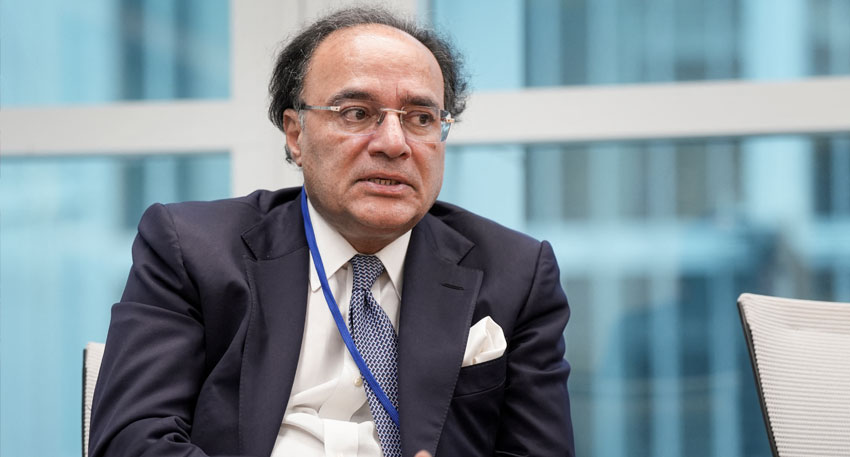
In an interview with CNN Business Arabia, the finance minister said Pakistan has stayed on a strong macroeconomic stabilization path for the past 18 months. He added that the results are “tangible and measurable” and aimed at long-term economic sustainability.
Aurangzeb said inflation, which once touched 38%, has now fallen to single-digit levels. He added that primary surpluses, a controlled current account deficit, a stable exchange rate and foreign reserves covering about 2.5 months of imports show improving economic health.
He pointed to two major signs of global trust. All three international credit rating agencies upgraded Pakistan this year, and the IMF Executive Board approved the second review under the Extended Fund Facility (EEF) earlier this week.
Pakistan Shifts Focus from Aid to Trade and Investment for Sustainable Growth: Finance Minister
— Khurram Schehzad (@kschehzad) December 15, 2025
Federal Minister for Finance and Revenue Senator Muhammad Aurangzeb has stated that Pakistan is no longer seeking aid-based support and is firmly transitioning towards trade- and… pic.twitter.com/NCsUn13xin
The finance minister said stability was achieved through disciplined fiscal and monetary policies, along with wide-ranging reforms. These include changes in taxation, energy, state-owned enterprises, public finance and privatization.
Also Read: Pakistan's total reserves reach $21 billion after IMF disbursement
On taxes, he said Pakistan’s tax-to-GDP ratio rose from 8.8% to 10.3%, with a clear target of 11%. He said the government plans to widen the tax base by bringing sectors like real estate, agriculture and retail into the formal system.
He added that technology, including AI-based tools and production monitoring, is being used to reduce leakages and improve tax compliance.
He acknowledged long-standing support from Saudi Arabia, the UAE, and Qatar but said ties are now entering a new phase focused on trade and investment instead of financial aid.
Aurangzeb said remittances remain vital, reaching about $38 billion last year and expected to rise to $41–42 billion this year, with over half coming from GCC countries.
Looking ahead, he said Pakistan is inviting Gulf investment in energy, oil and gas, minerals, AI, digital infrastructure, pharmaceuticals, and agriculture. He added that talks on a Free Trade Agreement with the GCC are at an advanced stage.
Reaffirming the policy shift, the finance minister said Pakistan’s future lies in productive investment and trade partnerships, not dependence on aid, as the government works to turn this vision into reality.