

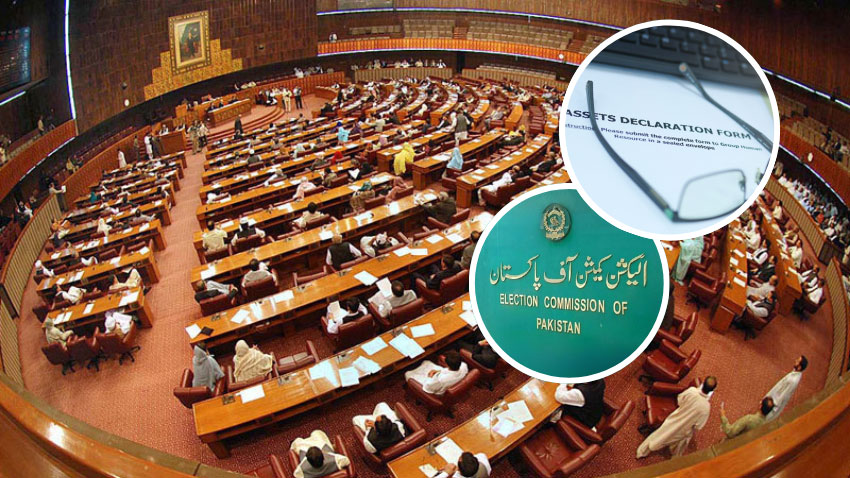
The Elections Amendment Bill 2026 was approved by the House despite strong opposition from Pakistan Tehreek-e-Insaf (PTI). The bill changes how asset declarations of parliamentarians are made public.
Under existing law, members of the National Assembly, Senate, and provincial assemblies must submit yearly details of their assets and liabilities to the Election Commission of Pakistan (ECP). These details also include assets owned by spouses and dependent children.
The current law also requires the Election Commission to publish these asset statements in the official gazette for public access.
Also Read: Pakistan secures $475 million from IsDB for M-6 motorway
The new amendment changes this rule. It allows the NA speaker or the Senate chairperson to stop public publication of a member’s asset details if the member applies in writing and proves that disclosure could endanger their life or family.
Such protection can only be granted for up to one year at a time. Even then, the lawmaker must submit a full and true statement of assets confidentially to the Election Commission.
According to the bill’s official explanation, the aim is to strike a balance between transparency and personal safety. It says public disclosure helps accountability and good governance, but unrestricted sharing may risk security and privacy.
The bill also replaces the word “Supreme” with “Federal Constitutional” in several sections of the law to align it with the newly formed Federal Constitutional Court under the 27th Amendment.
A similar proposal had earlier failed to gain consensus in a parliamentary committee, when both PTI and PML-N opposed it. This time, only PTI resisted the bill.
Also Read: PM Shehbaz heads to attend WEF summit 2026
During the session, the Standing Committee on Parliamentary Affairs presented its report, after which the House debated and passed the legislation.
The bill will now be sent to the Senate. It will become law only after Senate approval and presidential assent.


